Blog

  • Past Continuous Exhibition Reframes Krasner, Pollock

    Past Continuous Exhibition Reframes Krasner, Pollock

    The Past Continuous Exhibition at The Met asks viewers to consider Lee Krasner and Jackson Pollock as two artists whose work developed through contact, tension, shared space, and difference. Opened on October 4, 2026, and scheduled to remain on view through January 31, 2027, the exhibition is installed in Gallery 899, the Tisch Galleries, at The Met Fifth Avenue, with more than 120 works drawn from The Met’s collection and loans according to The Met.

    That framing matters because paired exhibitions can easily reduce one artist to the biography of another. The available facts point to a more careful structure: the show covers both careers, includes works from different phases, and closes attention on Krasner’s work after Pollock’s death in 1956. For community arts readers, the exhibition offers a useful case study in how museums can use proximity without flattening artistic identity.

    What The Past Continuous Exhibition Shows Side By Side

    Why The Past Continuous Exhibition Matters For Attribution

    The central interpretive challenge is not whether Krasner and Pollock influenced one another. They lived and worked in relation to each other after meeting as emerging artists and marrying in 1945. The more careful question is how to describe that relation without making influence a one-way street. The show’s title, “Past Continuous,” suggests movement rather than a sealed historical episode: practices continued, shifted, and were re-read through time.

    Pollock’s reputation has long been tied to large-scale abstraction and the drip-painting period associated with the late 1940s and early 1950s. The exhibition includes Autumn Rhythm: Number 30, 1950, a major painting measuring 8 ft. 10¼ in. by 17 ft. 4 in. That scale can dominate a room, but scale alone should not dictate interpretation. Krasner’s presence in the exhibition, including work from before and after 1956, gives viewers another route through mid-century abstraction: one based on revision, collage, gesture, structure, and self-critique.

    Shared Lives Without A Single Story

    Biographical context can help visitors understand chronology, yet it can also become a trap. Krasner and Pollock were married, and their domestic and studio lives intersected, but a respectful reading starts from the artwork. The exhibition’s value lies in showing parallel development rather than treating Krasner as a witness to Pollock’s career. That distinction is not a small matter. It affects wall text, catalogue writing, gallery order, and how audiences talk about the work after leaving the museum.

    For local arts organizers and educators, this offers a model for public programming. A discussion group might compare how two artists respond to similar materials, pressures, or movements without requiring a winner. A classroom visit might ask students to identify formal decisions before reading biography. A community tour might pause on what is visible: scale, color, edge, layering, density, revision, and rhythm.

    How The Exhibition Structure Guides Public Reading

    A Gallery Setting During A Museum Transition

    The exhibition’s placement in Gallery 899 matters because The Met’s modern and contemporary art spaces are in a period of change. The research notes state that most galleries numbered 900–926 are closed in preparation for the Tang Wing, scheduled for 2030. That creates a concentrated setting for Krasner and Pollock rather than a casual encounter within broader modern galleries. The result may sharpen the pair’s visibility, though it also means viewers encounter them through a focused curatorial frame.

    A focused installation can be productive when it slows looking. It can also narrow context if visitors do not know what is temporarily absent elsewhere. The practical reading is simple: this is not just a display of two famous names. It is a structured presentation during a larger museum reconfiguration, and that institutional setting affects how visitors encounter the art.

    The Catalogue As A Second Space For Interpretation

    The accompanying catalogue, Krasner and Pollock: Past Continuous, was published on October 13, 2026, by Yale University Press. Its listed authors are David Breslin and Brinda Kumar, and the publisher describes a volume with essays, contemporary artist reflections, and more than 100 artworks on the Yale University Press page. For readers who cannot spend long periods in the gallery, the book functions as a second interpretive space rather than a souvenir alone.

    Catalogues also matter because exhibitions end, while scholarship and images keep circulating. A carefully used catalogue can help community groups prepare talks, frame questions, and avoid repeating simplified accounts. It can also reveal what the gallery experience cannot fully hold: production history, reproduction details, essay arguments, and contemporary responses.

    • Use the catalogue to compare chronology with visual evidence, not to replace direct looking.
    • Ask how each artist’s work changes across time rather than reading one moment as the whole career.
    • Keep biographical claims separate from formal observations unless a source supports the connection.

    Community Arts Lessons From Krasner And Pollock
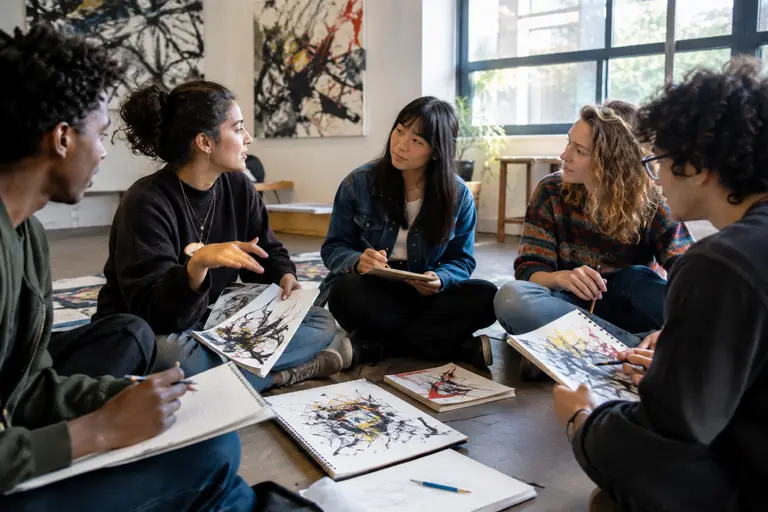
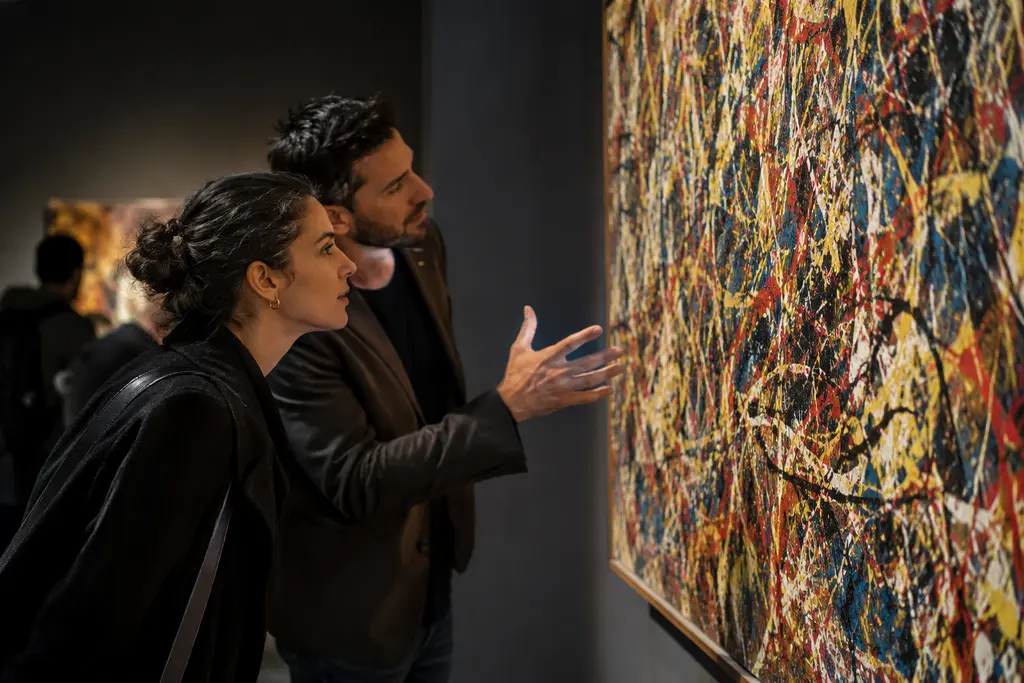
    Small group discussing abstract art in a museum education space

    Respectful Interpretation Starts With Evidence

    The Past Continuous Exhibition also has value beyond specialist art history. It shows how community arts writing can be passionate without becoming careless. Claims about influence, originality, and gendered reception should be tied to visible works or credible sources. That is especially true for Krasner, whose career has often been discussed in relation to Pollock. A better public conversation gives her work its own descriptive language.

    That practice is useful across cultural coverage. Readers comparing arts features across related sites such as Shimply may notice that the strongest community writing does not rely on praise alone. It names what can be seen, states what is sourced, and leaves room for uncertainty where the record is incomplete.

    There is also a rights-conscious lesson for artists, sellers, and educators. Discussing an exhibition does not require copying an artist’s style for commercial imitation or making unsupported claims about permissions. Community programming can focus on historical context, materials, gesture, abstraction, and museum interpretation while remaining cautious about reproductions, merchandise, and likeness-based projects.

    How Local Groups Can Discuss The Show

    A local reading group could use the exhibition as a prompt for broader questions: How do institutions display artistic couples? When does biography clarify, and when does it obscure? What happens when a museum places a less fairly recognized artist in direct relation to a more famous one? These are not abstract questions. They shape which artists appear in public memory and how young artists learn to see themselves within art history.

    A related NextClues essay on parallel modernism at The Met considers a similar issue: how a side-by-side chronology can challenge inherited assumptions. That approach is strongest when it resists easy correction narratives. Krasner should not be valued only because Pollock is famous, and Pollock should not be reduced to a foil. The harder and more rewarding task is to see the pressure, difference, and independence in both bodies of work.

    What The Past Continuous Exhibition Clarifies

    The Past Continuous Exhibition clarifies that museum pairing is never neutral. To place Krasner and Pollock together is to make an argument about time, relation, and artistic memory. Based on the exhibition details available from The Met and the catalogue information from Yale University Press, the show gives viewers a concentrated opportunity to test that argument against more than 120 works and a publication that extends the conversation beyond the gallery.

    For community audiences, the most useful takeaway is a method: look first, source claims carefully, and avoid inherited shortcuts. Krasner’s career deserves sustained attention, including her post-1956 work. Pollock’s work remains significant, but significance is not the same as singularity. Read together with care, the two artists offer a sharper account of modern abstraction than either myth or biography can provide on its own.
  • Fall Exhibitions Los Angeles: Punk Feminism

    Fall Exhibitions Los Angeles: Punk Feminism

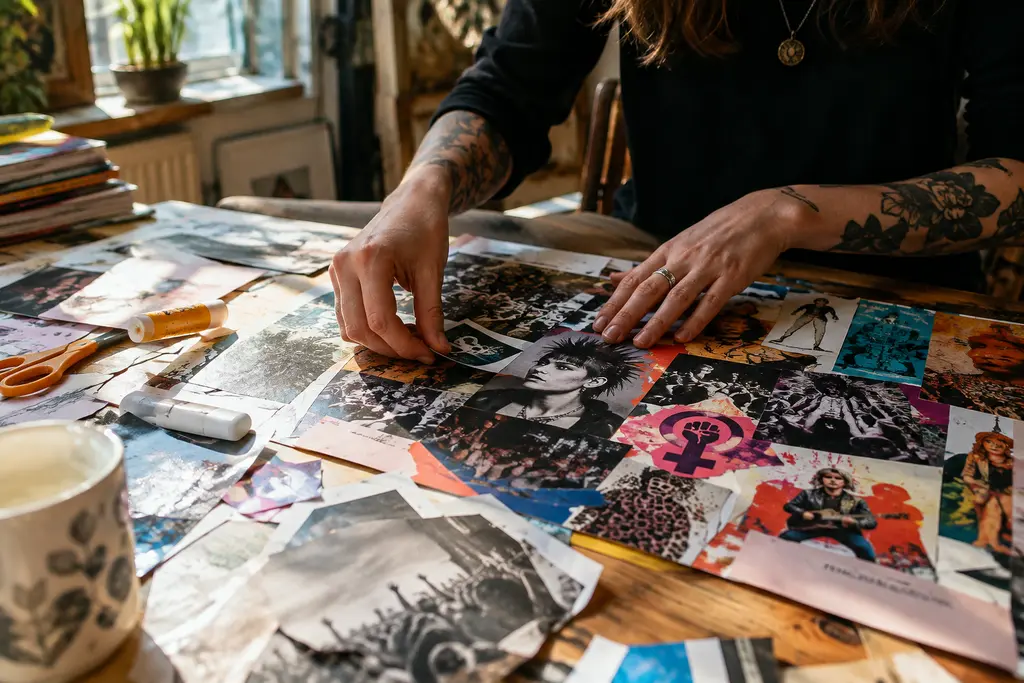
    Fall exhibitions Los Angeles coverage needs a careful date check on November 5, 2026. Some shows remained open on that date, some had already closed, and one key project in nearby Irvine asked viewers to think beyond city limits while still participating in the region’s wider art conversation. The most pointed example is Grrrl Germs: Punk Feminism Goes Viral, 1991–2026, an exhibition at Great Park Gallery that connects feminist punk culture, print circulation, and global exchange.

    As a culture curator, I read this season less as a single museum route than as a set of overlapping arguments: who gets archived, how domestic futures are imagined, how textiles can carry experimentation, and how migration or memory becomes visible through objects. The available facts support a practical, cautious map. They do not justify claims that any one theme defines the whole region, but they do show a productive spread across archives, design, photography, printmaking, and personal history.

    Fall Exhibitions Los Angeles And The Archive

    Fall Exhibitions Los Angeles Through Punk Memory

    Grrrl Germs: Punk Feminism Goes Viral, 1991–2026 opened on August 29, 2026, and runs through November 29, 2026, at Great Park Gallery in Irvine, according to the Daisy Chain Fields exhibition page. Admission is listed as free, with gallery hours on Thursdays and Fridays from noon to 4 p.m., and Saturdays and Sundays from 10 a.m. to 4 p.m. Those details matter because the show was still available to see on November 5, 2026, but only for a limited remaining period.

    The project’s title frames “going viral” through punk feminism rather than through a purely platform-based story. V Magazine reports that the exhibition includes archival materials spanning 35 years, from 1991 to 2026, with content from more than 30 countries V Magazine. That scale is significant, but it should be treated with care. A multi-country archive can point to circulation and affinity without implying that every community represented shared identical politics, aesthetics, or conditions of production.

    What The Irvine Setting Changes

    Although the topic is often framed around Los Angeles, Great Park Gallery is in Irvine, not the City of Los Angeles. That distinction is not a minor detail. Southern California art viewing often crosses municipal boundaries, yet location shapes access, audience, and local context. For fall exhibitions Los Angeles readers, the Irvine setting makes the show a regional rather than strictly city-based highlight.

    The strongest reason to place Grrrl Germs near the center of the season is not novelty. It is the exhibition’s archival question: how do zines, punk networks, feminist media, and cross-border exchange become visible inside a gallery? The evidence available supports that the show spans decades and countries. It does not support a sweeping claim that the show fully represents all punk feminist movements. A respectful reading leaves room for partiality, gaps, and the differing stakes of the communities whose materials appear in the archive.

    Major Museum Threads Across The Season

    Brockman Gallery At LACMA

    At LACMA, The Brockman Gallery: Los Angeles, 1967–1990 opened on October 18, 2026, and is listed through January 24, 2027, in BCAM Level 1. The research identifies it as the first large-scale exhibition dedicated to Brockman Gallery, with more than 60 works and artists including David Hammons, Suzanne Jackson, and Carrie Mae Weems. On November 5, 2026, it was not a past-tense footnote; it was an active exhibition with several months remaining.

    Its place in the season is especially meaningful beside Grrrl Germs. Both exhibitions, in different forms, concern cultural infrastructure: the gallery, the archive, the network, the artists who circulate work through formal and informal systems. The comparison should not collapse their histories. Brockman Gallery belongs to a specific Los Angeles art history from 1967 to 1990, while Grrrl Germs is framed around punk feminism from 1991 to 2026. Placing them side by side helps clarify how institutions preserve different kinds of cultural labor.

    Domestic Futures, Textiles, And Moving Images

    LACMA’s fall calendar also included Home of the Future, 1925–1985: Designing Domestic Utopias, dated September 27, 2026, through March 14, 2027, in the Resnick Pavilion. Its stated focus on imagined visions of domestic life across six decades through models, films, and household objects gives the season a design-history axis. Rather than treating home as a neutral setting, the exhibition appears to ask how domestic ideals were made visible through material culture.

    Nearby in the same pavilion, Textile Alchemy: The Art of Reiko Sudō & NUNO runs from September 20, 2026, through March 7, 2027. The research describes it as a retrospective survey of textiles by Japanese designer Reiko Sudō and the collective NUNO, bringing craft and experiment into contact. LACMA also listed Eileen Cowin: Between Panic and Paradise, dated August 23, 2026, through January 3, 2027, in BCAM Level 2, with photography and video addressing romance, rivalry, and the personal and political.

    These shows widen the frame of fall exhibitions Los Angeles without forcing a single theme onto them. Domestic design, textile experimentation, and image-based narrative each require different interpretive tools. Readers tracking institutional collaboration across the city may also find context in this related NextClues piece on collaborative art in Los Angeles, which sits near the same civic question: how art institutions organize shared public attention.

    Date Status Matters For Fall Coverage

    Shows Already Closed By November 5

    Fashioning Chinese Women: Empire to Modernity had already closed by November 5, 2026. Its dates were June 14, 2026, through October 12, 2026, at LACMA’s BCAM Level 2. The research describes the exhibition as tracing transformation across a century through more than 70 ensembles from Shanghai, Hong Kong, and America. Because it had ended, it belongs here as retrospective context rather than as an invitation to visit.

    That distinction is essential for accurate cultural writing. Fall previews often remain online after dates pass, which can mislead readers if tense and status are not corrected. A concluded fashion exhibition can still inform how we interpret the season’s concerns with dress, identity, modernity, and transnational movement. It should not be described as open on November 5, 2026.

    Works Still In View During November

    Other LACMA exhibitions listed in the research were still active on November 5, 2026. Danse Macabre: Death in Print from Dürer to Dix and Pablo Picasso — Portraits in Disguise both run through December 6, 2026, at BCAM Level 3. The first is described as addressing allegories of death through print art, while the second focuses on hidden identity and portraiture.

    The Skirball Museum’s Jenny Yurshansky: What We Carry opened on October 22, 2026, and runs through February 28, 2027. The research describes it as combining personal objects and stories of migration to address home, memory, and survival. Seen beside the LACMA and Irvine shows, it reinforces how objects can function as carriers of lived experience without requiring every exhibition to make the same claim.

    How To Read The Season Without Flattening It

    Visitor taking notes while looking at framed works in a quiet gallery

    Rights, Zines, And Creator Commerce

    Archival exhibitions often inspire artists, zinesters, fashion makers, and independent sellers. That inspiration should be handled with respect. Viewers can learn from punk layout strategies, self-publishing ethics, textile experimentation, or exhibition display choices without copying protected images, living artists’ work, personal documents, or community materials for commercial use. This is not legal advice, but a cautious rights habit: credit sources, seek permission when needed, and avoid treating archives as open stock libraries.

    For readers interested in exploring further connections within the culture, visiting robsonic.org provides access to a related site in the same network. The relevance of this site lies in its exploration of the overlaps between punk feminism, zine culture, and live events, offering a broader understanding of how these different elements come together.

    Practical Notes For Careful Viewers

    • Check exact dates before planning around fall exhibitions Los Angeles coverage, especially for shows that closed before November 5, 2026.
    • Treat Irvine, Los Angeles, and the Skirball/LACMA corridor as related but not identical cultural locations.
    • For archival shows, distinguish between public viewing access and permission to reproduce materials.
    • Read exhibition claims at the scale they support: a 35-year archive is substantial, but it is not the same as a complete global history.

    The practical value of this season is its range. A viewer could move from punk feminist print culture to Black Los Angeles gallery history, from domestic design to Japanese textile experimentation, from fashion history to migration objects. That range is not evidence of a single trend. It is evidence of several institutions and projects placing material culture, memory, and social identity before the public at overlapping moments.

    Fall Exhibitions Los Angeles As A Regional Conversation

    Fall exhibitions Los Angeles coverage is strongest when it keeps time, place, and source limits visible. Grrrl Germs: Punk Feminism Goes Viral, 1991–2026 remained open in Irvine on November 5, 2026, with documented dates, free admission, and an archive described as spanning 35 years and more than 30 countries. LACMA’s active shows extended the season through design, textiles, photography, prints, portraiture, and the Brockman Gallery’s history, while the Skirball Museum added a migration-centered project that continued into 2027.

    The shared value across these exhibitions is not that they say the same thing. It is that each asks viewers to slow down with evidence: objects, images, garments, prints, stories, and archives. For a fall art route, that is enough. The season offers several ways to study how communities make culture visible, how institutions frame that culture, and how viewers can respond without flattening the people and histories represented.

  • Live Music Trends After Glasper’s Robtober Run

    Live Music Trends After Glasper’s Robtober Run

    Robert Glasper’s October 2026 Blue Note run offered a useful case study for reading live music trends without stretching the evidence too far. The residency, known as Robtober, took place from October 1 through November 1, 2026, and has now concluded as of November 5, 2026. Its structure, guests, and anniversary tie-in give arts organizers a grounded view of how a club residency can function as both concert series and cultural gathering.

    Glasper’s run at Blue Note New York was not a single headline date. It was an extended residency with two shows nightly, according to the Blue Note announcement distributed by Sacks & Co., which also identified it as his eighth annual Robtober and placed it within Blue Note New York’s 45th anniversary programming Blue Note announcement. That matters because a month-long format changes the relationship between artist, venue, guest performers, and audience. Rather than relying on one night of scarcity, the series built meaning through repetition and variation.

    Live Music Trends In Residency Programming

    Live Music Trends In A Month-Long Format

    The most visible pattern in Glasper’s October 2026 residency was the value of duration. A one-night concert asks an artist to compress an idea into a single bill. A residency allows the idea to unfold across multiple evenings, with returning listeners able to compare lineups, energy, and musical emphasis. In Robtober’s case, the October 1 to November 1 calendar gave the series room to host named guests across different points in the month while maintaining Glasper as the central artistic presence.

    That kind of format can support community life in a way that a single tour stop may not. A club residency can become a recurring appointment for listeners, musicians, critics, and neighborhood regulars. The available research does not prove how many people returned for multiple nights, and it would be careless to claim a quantified behavioral trend without ticketing data. Still, the design itself encouraged repeat attention: two shows nightly, a rotating set of collaborators, and a clearly defined October identity.

    Anniversary Programming As Cultural Framing

    Blue Note New York’s 45th anniversary gave the residency a second frame beyond artist billing. Glasper’s special one-set-only performance on October 14, 2026, was presented as part of that anniversary moment. That pairing is worth noting for programmers because venue anniversaries can risk feeling institutional rather than artistic. Here, the anniversary was tied to a working artist whose practice already bridges jazz, R&B, hip-hop, soul, and related traditions.

    For community organizers, this suggests a practical lesson: anniversary programming gains clarity when it is attached to an artistic event with its own reason for existing. The date was not merely ceremonial. It sat inside a larger run, giving the celebration context. That does not mean every venue should copy the model, especially since Blue Note’s brand recognition and Glasper’s audience position are not easily replicated. It does show how a venue can connect memory, present-day performance, and repeat attendance through careful programming.

    Guest Lineups And Genre Blending

    Collaborators As A Curatorial Signal

    The guest list from October 2026 points to one of the most discussed live music trends: genre blending as a live programming strategy. The reported October guests included Terrace Martin and Phoelix from October 7 through October 10, Lalah Hathaway on October 11, Questlove and Bilal on October 21, Wyclef Jean with Q Theory on October 22 and October 23, Kem presenting Alkemy on October 24 and October 25, Derrick Hodge and Chris Dave toward the end of the month, and a Halloween special on October 31.

    Those names connect jazz practice with R&B, hip-hop, soul, neo-soul, and popular songwriting traditions. A Desertstorm Radio item specifically framed the Questlove and Bilal appearance as part of Glasper’s genre-crossing October run Questlove and Bilal feature. The stronger claim, supported by the lineup itself, is that Robtober treated genre borders as porous in performance. The weaker claim, which should be avoided without more data, would be that all live music is moving in one direction because of this residency alone.

    Why Surprise Still Needs Structure

    Surprise has long been part of club culture, especially in cities with deep musician networks. In Robtober’s case, the announced guests gave each portion of the month a distinct identity while leaving space for the aura of possibility that surrounds a residency. That balance is important. Surprise can build excitement, but audiences also need enough information to decide whether a night fits their taste, budget, and schedule.

    From a cultural-events perspective, the lesson is not simply “book surprise guests.” It is to create a structure strong enough that the announced program stands on its own. Glasper’s name, the Blue Note setting, and the published October calendar created that structure. Guest artists then expanded the frame rather than carrying the entire burden of meaning.

    Club Scale, Pricing Signals, And Audience Trust

    The Intimate Room As A Premium Experience

    Blue Note New York is identified in the research as an intimate listening room in Greenwich Village, with the residency typically using two nightly set times: 8:00 PM and 10:30 PM. That format matters because scale affects how audiences interpret value. In a smaller club, proximity to the artist and the sense of being present for a less repeatable musical exchange can shape the experience as much as production size.

    Price references in the research point to late-October special-night tickets around the $197 to $226 range, with many shows reportedly sold out well in advance. Because the approved source list for this article does not include the ticketing page that carried those figures, this article treats those numbers cautiously and does not use them as a basis for broad claims. What can be said more safely is that Robtober was positioned as a premium club event: a recognized artist, a long-running residency identity, high-profile collaborators, and a venue with international cultural weight.

    Trust Is Built Before The Ticket Page

    Audience trust in a residency is built through more than lineup announcements. It comes from a track record: the artist’s past work, the venue’s listening-room reputation, and the coherence of the programming. Glasper’s eighth annual Robtober had the advantage of continuity. Returning audiences were not being asked to believe in a brand-new concept. They were being invited back into an established October ritual.

    For independent organizers, the transferable idea is consistency, not scale. A small gallery concert, handmade market performance, or neighborhood jazz night can build trust by returning at a predictable interval and maintaining a clear artistic point of view. Readers who are interested in exploring additional community context and related insights can visit Kay Granger, a related site in our network.

    What The Residency Suggests For Cultural Organizers

    Event planner reviewing a music calendar with performance notes

    Program Across Communities Without Flattening Them

    One reason Glasper’s residency is useful for thinking about live music trends is that it shows cross-genre programming without requiring every artist to sound the same. Jazz, hip-hop, R&B, soul, and neo-soul can share a bill or a month-long frame while still preserving distinct practices and lineages. Respectful programming should name those differences rather than treating them as interchangeable mood labels.

    That care matters because genre language often carries community history. A lineup with Questlove, Bilal, Lalah Hathaway, Wyclef Jean, Terrace Martin, Phoelix, Kem, Derrick Hodge, and Chris Dave does more than signal variety. It points to networks of Black musical innovation across recording, improvisation, songwriting, rhythm, and live collaboration. The evidence supports that the residency gathered artists across those connected forms; it does not support inflated claims about a single event redefining music culture.

    Use Residencies To Create Meaning Over Time

    For arts councils, venue bookers, and artist-led collectives, the residency model offers a different rhythm from festival programming. Festivals often concentrate attention into a short burst. Residencies can build relationships over days or weeks. They allow an audience to return, compare, and feel part of a continuing conversation. In Glasper’s case, October 2026 became the container for that conversation.

    The risk is repetition without purpose. A residency needs a curatorial reason to keep going. Robtober had several: Glasper’s recurring Blue Note relationship, the 45th anniversary tie-in, two-show nightly club structure, and a changing guest list. Those elements made the month feel segmented rather than static. That is a useful model for cultural workers designing artist spotlights, seasonal series, or neighborhood performance blocks.

    Robert Glasper’s Robtober Residency

    A Careful Reading Of Live Music Trends

    As a completed October 2026 event, Robert Glasper’s Robtober residency should be read with proportion. It is strong evidence for what one prominent artist and one major jazz club were able to build together. It is not, by itself, proof of the full direction of the concert business. The most reliable insights are narrower: long residencies can deepen audience attention, guest programming can widen artistic context, and club scale can make variation feel personal.

    The residency also reminds cultural organizers that live music trends are not only about technology, ticketing, or market size. They are also about trust, place, timing, and artistic relationships. Glasper’s October 1 to November 1 run succeeded as an object of analysis because it had all four: a known room, a defined month, a recurring concept, and collaborators who gave the calendar shape. For those of us who care about creativity as community practice, that is the lasting insight from Robtober 2026.

  • Habibi Festival NYC: Playlist Highlights

    Habibi Festival NYC: Playlist Highlights

    After Habibi Festival NYC completed its sixth annual edition from October 8–11, 2026, at Joe’s Pub, the most useful way to revisit the program is not as a single genre showcase. The four-night event was framed around music from the SWANA region, South West Asia and North Africa, but its schedule placed jazz, maqām, indie rock, folk cabaret, contemporary Arabic song, and diasporic experimentation beside one another. That made the festival feel less like a fixed category and more like a carefully sequenced listening argument.

    The available source record supports a cautious recap rather than a claims-heavy review. We have verified dates, venue, lineup information, and stated program elements, but not a full post-event archive of audience response or complete setlists. With that boundary in mind, the strongest reading of the festival comes from the playlist logic of the announced pairings: who shared a night, which traditions were placed in conversation, and how the post-set discussions expanded the listening frame.

    How Habibi Festival NYC Framed The 2026 Program

    A Four-Night Sequence At Joe’s Pub

    The 2026 edition ran Thursday through Sunday, October 8–11, at Joe’s Pub in New York City, and was identified as the festival’s sixth annual edition by BroadwayWorld. The same report noted the event’s return to Joe’s Pub and the partnership with afikra for conversations after each evening’s performances BroadwayWorld report. That structure matters because it placed performance and interpretation in the same nightly arc.

    The official festival site listed the four-night sequence as follows: October 8 paired Amir ElSaffar New Quartet with Akram Abdulfattah; October 9 paired Nadine El Roubi with Akram Abdulfattah; October 10 paired Marwa Morgan & Ameer Armaly Ensemble with Malika Zarra; and October 11 paired Laura Elkeslassy with Rasha Nahas. The site also noted that Ghalia Benali, who had appeared in earlier materials, withdrew from the lineup official festival lineup.

    The Habibi Festival NYC Playlist As A Curatorial Map

    Thinking of the program as a playlist is useful because a playlist is not only a list of names. It is a sequence of relations. In this case, the order moved across instrumental experimentation, vocal performance, Arab and North African references, Palestinian rock and indie inflections, Judeo-Arabic and North African folk cabaret, and cross-cultural forms shaped by diasporic movement.

    That does not mean the festival reduced SWANA music to a single sound. The opposite reading is better supported by the lineup. The program placed artists with different methods into adjacency without claiming that they represented every tradition in the region. Habibi Festival NYC worked, at least on paper, by making proximity meaningful: the audience could hear contrast as well as continuity.

    Artist Pairings And Listening Threads

    Maqām, Jazz, And Experimental Form

    Amir ElSaffar New Quartet opened the festival sequence on October 8 beside Akram Abdulfattah. Research notes describe ElSaffar’s performance as built around the album Live at Pierre Boulez Saal, recorded in Berlin, and as joining Arab maqām with jazz, microtonal piano, experimental harmonies, and shifting dynamics. Those details suggest a set concerned with tuning, structure, and the friction between inherited forms and contemporary ensemble language.

    Akram Abdulfattah appeared on both October 8 and October 9, giving his presence a bridging function across the first half of the festival. Without a verified full setlist, it would be risky to overstate how those two evenings differed in practice. Still, the schedule itself positioned him as a recurring voice between an instrumental opening night and the following evening with Nadine El Roubi.

    Nadine El Roubi’s October 9 appearance had a clear album context. Research notes state that her set was scheduled to debut her full album Life Is Beautiful Again live, with the album listed for release on October 26, 2026. Because November 3, 2026, is after that scheduled date, a careful formulation is that the album had been scheduled for release by then; the provided notes do not independently confirm its release status. Her program materials also referenced songs including “Good Mood” and “Honey Butter.”

    Voice, Diaspora, And Cabaret Memory

    The October 10 pairing of Marwa Morgan & Ameer Armaly Ensemble with Malika Zarra offered a different kind of listening thread. Morgan is identified in the research notes as an Egyptian-born vocalist based in New York City, performing with an ensemble led by instrumentalist Ameer Armaly. Her music is described as blending classical Arabic influences with contemporary elements, with the recent single “Bukra” named in the notes.

    Malika Zarra’s presence on the same night broadened the vocal frame. While the supplied research does not give a detailed song list for her set, her placement after Morgan and Armaly indicates a night centered on voice, ensemble color, and the movement between tradition-informed performance and present-tense composition. A retrospective should resist filling that gap with unverified claims about audience reaction or specific arrangements.

    The final night, October 11, paired Laura Elkeslassy with Rasha Nahas. The research notes describe Elkeslassy as bringing Judeo-Arabic and North African folk cabaret traditions, while Nahas brought Palestinian rock and indie influences. That combination is one of the clearest examples of the festival’s range: cabaret memory and rock-inflected songwriting appeared not as opposites, but as different methods for carrying language, history, and feeling through performance.

    Community Context Beyond The Stage

    Moderator and musicians in conversation after a live performance

    Conversations After The Sets

    Each festival evening was followed by a conversation hosted in partnership with afikra | عفكرة, described in the research notes as a global media platform exploring creative process, culture, and history within the Arab world and SWANA diaspora. This post-performance format changes how a festival can be received. It gives audiences space to ask how sound relates to place, archive, migration, memory, and collaboration, rather than treating performance as isolated entertainment.

    For a festival centered on SWANA music, that choice is especially significant. Public conversations can help counter the flattening that often happens when regional labels are used too casually. SWANA is a geographic and cultural marker, not a genre. The strongest festival framing makes room for difference within the term rather than presenting it as a single aesthetic identity.

    Fashion, Presence, And Respectful Reception

    Live music events are also visual gatherings. Clothing, stage presence, lighting, and audience dress can become part of the cultural experience, though none of the provided sources give verified detail on the festival’s visual design. For those who value costume culture and fashion as artistic expression, Fairytale Fashion provides engaging perspectives within the same network. Viewing festival style as an enhancement to the experience should align with respecting the artists’ central role in the musical narrative.

    Respectful reception also means avoiding shortcuts. It would be inaccurate to describe every artist in the program through the same regional marker alone. The lineup included artists connected with jazz, Arabic musical systems, North African and Judeo-Arabic traditions, Palestinian rock and indie modes, and contemporary songwriting. A listener’s task is to hear those specifics before reaching for general labels.

    Habibi Festival NYC And The Value Of Context

    The 2026 edition of Habibi Festival NYC can be read as a compact case study in how a festival playlist builds meaning. The dates and pairings give the structure: four nights, two headline acts per evening, a New York venue known for intimate performance, and conversations after the sets. The artistic value comes from the way those parts asked listeners to compare, not collapse, different practices.

    Because the verified research does not include detailed reviews, ticket data, recorded audience comments, or full post-event setlists, any recap should stop short of declaring consensus “standouts.” What can be said with confidence is that the program brought together artists whose work points to multiple routes through SWANA-linked music: maqām and jazz dialogue, album-centered contemporary performance, Arabic and North African vocal references, Judeo-Arabic cabaret memory, Palestinian indie and rock influence, and New York-based diasporic collaboration.

    That is enough to make the playlist frame valuable. Habibi Festival NYC did not need a single thesis about what SWANA music is. Its 2026 program suggested a better question: what happens when artists with distinct histories, methods, and audiences are heard in relation over four nights? The answer, based on the documented lineup, is a festival model that treats context as part of the music.

  • Live On Sunset and West Hollywood’s Music Memory

    Live On Sunset and West Hollywood’s Music Memory

    Live On Sunset is scheduled for Saturday, November 14, 2026, from 4:00 PM to 11:00 PM on Sunset Boulevard between Doheny Drive and San Vicente Boulevard in West Hollywood. As of November 3, 2026, the official event information lists admission as free, registration as required, and registration as at capacity with a waitlist available on the official event page. That combination gives the concert an unusual civic character: open in price, limited in capacity, and located on one of Southern California’s most symbolically loaded music corridors.

    The event deserves attention not only as a concert booking, but as a public-space decision. A street stage on Sunset Boulevard changes how audiences encounter the Strip. Instead of entering a single club, theater, or hotel ballroom, attendees are being gathered along the corridor itself. That matters because the Sunset Strip’s music identity has often been built through a patchwork of private venues, nightlife memory, and city branding. A city-produced outdoor event reframes that memory as a shared civic experience, even while the registration cap reminds us that public culture still depends on logistics, security planning, access rules, and neighborhood impacts.

    What Live On Sunset Puts On The Strip

    Live On Sunset Access And Capacity

    The strongest evidence available from official sources is practical: date, place, cost, registration status, and lineup. The concert is free, but free admission does not mean unrestricted entry. Because Live On Sunset is listed as at capacity, the waitlist becomes more than an administrative detail. It is a signal that demand has already exceeded the initial registration pool before the event date. For a civic concert, that raises a familiar arts-access question: how can a city celebrate public culture while keeping the event safe, legible, and usable for the people who secured access and for residents living near the closure zone?

    The research notes describe a broader closure period from Friday, November 13 at noon through Sunday, November 15 at noon, with the concert itself set for November 14. That is a significant intervention for a one-night program. It means the event’s footprint extends beyond performance hours and into setup, street management, business access, residential routines, and teardown. For event culture, these details are not secondary. They shape who feels included, who feels inconvenienced, and whether a festival-style program is remembered as a civic gathering or as a disruption with a stage attached.

    One Stage, Many Meanings

    The reported plan includes one main stage, food and beverage vendors, outdoor activations, and fan engagement across the corridor. A single-stage format can concentrate attention in useful ways. It avoids the fragmented scheduling of multi-stage festivals, where audiences may treat music as background while moving from one attraction to another. Here, the symbolic premise is narrower: Sunset Boulevard as a shared listening site for one evening. That does not automatically make the event more artistically serious, but it does place performance at the center of the public design.

    Access, Closures, And Crowd Flow

    Free Does Not Mean Frictionless

    Free concerts are often discussed as if price is the only barrier. In practice, registration timing, transportation, street closures, bag rules, weather policy, accessibility services, and waitlist communication can all shape the audience. The research notes state that the event is rain or shine, that large bags over 12 inches by 6 inches by 12 inches are prohibited, that outside food and beverage are barred, that umbrellas are not allowed, and that pets are excluded except service animals. ADA accommodations are also listed. Those policies are common in large outdoor event settings, but they still require clear communication because they affect families, disabled attendees, older concertgoers, workers arriving from shifts, and visitors unfamiliar with West Hollywood’s street grid.

    Street closures also change the cultural feel of a place. Closing Sunset Boulevard between key points, with adjacent blocks affected, temporarily removes the corridor from ordinary vehicle use and assigns it a ceremonial function. That can be powerful. It can also expose the tension between entertainment branding and everyday city life. A cautious reading is best: the closure may help create a focused event zone, but its success depends on execution that the public will only be able to judge after November 14, 2026.

    • Scheduled concert hours: November 14, 2026, 4:00 PM to 11:00 PM.
    • Location: Sunset Boulevard between Doheny Drive and San Vicente Boulevard.
    • Admission: free, with required registration listed as at capacity as of November 3, 2026.
    • Broader closure window in the research notes: November 13 at noon through November 15 at noon.

    For readers seeking further understanding on how different cultural sites manage events, Shimply provides insightful parallels within the same network. In this case, the most responsible framing is not hype; it is a careful separation of confirmed event details from claims that can only be assessed after the concert takes place.

    Lineup As Cultural Framing

    From Headliner To Corridor Identity

    Visit West Hollywood identifies Sheryl Crow as the headline act and describes her as a nine-time Grammy winner and Rock & Roll Hall of Fame inductee, with Local Natives, Empress Of, Grace Bowers, Doug Locke, and Mia Moretti also on the bill Visit West Hollywood listing. That booking strategy reads as broad rather than narrowly genre-bound. Crow brings an established rock and pop-country profile; Local Natives connect the bill to Southern California indie rock; Empress Of brings electronic pop and bilingual artistic identity; Grace Bowers represents younger guitar-driven performance; Doug Locke and Mia Moretti expand the frame across performance and DJ culture.

    This mix matters because the Sunset Strip’s musical memory has often been reduced to a few dominant eras and images. A lineup with multiple generations and adjacent styles can resist a simple nostalgia package. It suggests that the city is not merely staging a reenactment of a past club scene. Instead, it is presenting a one-night program that uses a heritage corridor while acknowledging that music culture now moves through festivals, DJ sets, digital discovery, guitar performance, and civic placemaking at the same time.

    Respecting Artists Without Inflating Claims

    It would be easy to overstate what one concert can do. A single municipal event cannot, by itself, revive a music district, solve venue economics, or settle debates about nightlife, housing, policing, parking, and public spending. Those outcomes require longer evidence. What can be said, based on the confirmed lineup and location, is narrower and more defensible: the event places recognized artists and local cultural infrastructure in direct conversation with the Strip’s public image.

    That distinction is important for cultural criticism. Artists should not be treated as decorative proof of a city’s ambitions. They are working performers entering a civic production with its own budget, access limits, and political meaning. The best reading keeps both sides visible: the artistry on stage and the municipal choice to build a public event around that artistry.

    Heritage Without Nostalgia

    Sunset Boulevard venue fronts seen from a pedestrian area

    The Strip As A Working Symbol

    The research notes connect the 2026 event to earlier Sunset Strip music festivals that ran from 2008 to 2014. That comparison is useful, but it should be handled with care. Continuity in location does not always mean continuity in purpose, scale, funding, or cultural effect. A festival associated with clubs and a city-produced street concert may share geography while operating under different public expectations.

    Heritage can become a shorthand that flattens local culture into marketable memory. West Hollywood’s challenge is to avoid treating the Strip as a museum piece. The more interesting possibility is to use the corridor as a living site where residents, businesses, visitors, and artists negotiate what public music can mean in a dense city. The one-stage format and free registration model are part of that negotiation. So are the closures, parking suspensions, security policies, and waitlist.

    From a curatorial standpoint, the event’s value will be measured through more than applause. Useful questions after November 14 will include whether crowd movement felt safe, whether local businesses benefited or were boxed out, whether accessibility commitments were visible in practice, whether sound and sightlines served audiences beyond the front rows, and whether the program expanded the Strip’s story rather than simply repeating its most familiar mythology.

    Live On Sunset And The Strip’s Public Memory

    A Concert Before It Becomes A Claim

    Live On Sunset is best understood, before it happens, as a high-profile experiment in civic music programming. The confirmed facts are strong enough to justify attention: a free but capacity-limited concert, a Sheryl Crow-led lineup, a major Sunset Boulevard closure, and a production window that reaches beyond the evening of performance. The larger claims — revitalization, renewal, cultural reset — should remain provisional until the event can be evaluated through attendance experience, neighborhood response, and post-event public reporting.

    The value of Live On Sunset may lie in that tension. It is both a celebration and a test. It asks whether a city can honor music heritage without freezing it in nostalgia, whether a famous corridor can serve a present-day public rather than only its own legend, and whether free access can be made meaningful when demand exceeds capacity. On November 14, 2026, West Hollywood will place those questions on Sunset Boulevard. The review that follows should be measured by evidence, not by memory alone.

  • Hard Art exhibition and Black Abstraction

    Hard Art exhibition and Black Abstraction

    The Hard Art exhibition at MoMA PS1 is scheduled to open on November 5, 2026, and run through March 8, 2027. Framed around Black artists’ uses of abstraction in the United States from 1969 to the present, the show arrives as both an art-historical argument and an institutional act of re-reading. Rather than treating abstraction as separate from social, political, and bodily experience, the exhibition appears to position opacity, material experiment, and conceptual pressure as central to how Black artists have shaped modern and contemporary art.

    That premise deserves close attention because abstraction has often been discussed through formal categories that can mute questions of race, institution, audience, and access. MoMA PS1’s account states that the exhibition features more than forty artists across three generations and traces Black artists’ engagement with abstraction from 1969 onward, with painting set beside sculpture, video, sound, and conceptually driven practices MoMA PS1 details. The claim is not that these artists share one method. The stronger reading is that their differences create a record of sustained argument about what abstraction can carry.

    What The Hard Art exhibition Sets In Motion

    Why The Hard Art exhibition Begins In 1969

    The exhibition’s date range begins in 1969, a choice that places the project near a period of intense debate around Black artistic self-determination, institutional exclusion, and the politics of visibility. Based on the research supplied by MoMA PS1, the show connects artists who rose to prominence in the 1970s with later and present-day practices. That structure matters because it resists a narrow view of abstraction as either apolitical formalism or a secondary track beside figurative representation.

    The title comes from Peter Bradley’s description of The DeLuxe Show, presented in Houston in 1971. In that reference, “hard” does not seem to mean inaccessible for its own sake. It points instead to abstraction that asks for slower engagement, especially where form, surface, density, and refusal do not give viewers a simple narrative. For an exhibition review, that distinction is useful. Difficulty can be a barrier, but it can also be an ethical demand: to look without expecting the work to explain itself on inherited terms.

    Artists Named Across Generations

    The artist list supplied by MoMA PS1 places historical figures such as Frank Bowling, Mark Bradford, Peter Bradley, Barbara Chase-Riboud, Ed Clark, Melvin Edwards, Jennie C. Jones, Joe Overstreet, and Raymond Saunders in relation to artists including Aria Dean, Torkwase Dyson, Nikita Gale, Suzanne Jackson, Rindon Johnson, Caroline Kent, Carolyn Lazard, Eric N. Mack, Charisse Pearlina Weston, and SoiL Thornton. The range is significant, though it should not be flattened into a single school or style.

    Several of these artists are known for very different approaches to material and address. The more careful interpretation is that the show uses adjacency as a critical tool. Paintings from the 1970s can be read beside works involving sound, video, sculpture, or installation not because they look alike, but because they may test similar questions: How does form hold pressure? How does abstraction signal refusal? How does a work engage the viewer without yielding an easy statement?

    Generations, Materials, And A Longer Argument

    Painting Beside Sound, Video, And Sculpture

    One of the key stakes is medium. The research notes identify Peter Bradley’s Circle of Fifths from 1973 and Mildred Thompson’s Magnetic Fields from 1991 among notable works on view. Without overstating what can be known before the exhibition opens, those inclusions suggest that the show attends to abstraction across different moments in late twentieth-century art. Bradley’s work anchors the 1970s context named in the title’s origin, while Thompson’s work extends the discussion into another phase of abstraction’s relation to energy, structure, and perception.

    Lorraine O’Grady’s 2010–11 video work, described by Mariane Ibrahim Gallery as an 18-minute piece using close-ups of the artist’s hair blown by fans with environmental sound, adds another register to the exhibition’s account of abstraction Mariane Ibrahim Gallery notes. That example is especially useful because it complicates any quick split between the abstract and the embodied. Hair, air, motion, and sound can operate formally, yet they also carry cultural and personal resonance.

    What Juxtaposition Can And Cannot Prove

    Exhibitions built across generations can clarify overlooked lines of influence, but they can also risk compressing distinct careers into a curatorial thesis. A cautious reading of this project should hold both possibilities open until the installation can be seen in full. The stated organization juxtaposes historical paintings with recent practices, which may give viewers a chance to consider continuity without assuming direct inheritance in every case.

    That makes the Hard Art exhibition more than a roll call. Its analytical value will likely depend on how the galleries handle spacing, chronology, publication materials, and the relation between individual works and the larger thesis. For readers interested in related institutional framing of Black abstraction, NextClues has also covered the Geometries exhibition at Studio Museum Harlem, another project where form and identity are not treated as separate categories.

    Public Memory And Institutional Framing

    Audience seated for an artist talk inside a museum event space

    The 1980 PS1 Reference Point

    The exhibition’s public programming includes a talk titled “Revisiting PS1’s Afro-American Abstraction (1980),” scheduled for November 7, 2026, from 3:30 to 5 p.m., with artists who participated in that earlier show, including Howardena Pindell and James Little. The event matters because it places the new exhibition in dialogue with PS1’s own institutional past. That does not automatically settle how the 1980 exhibition should be interpreted now, but it does signal that memory, documentation, and reassessment are part of the project.

    Such programming can be especially valuable when exhibitions address histories that were unevenly recorded or unevenly valued. Public talks do not replace the artwork, but they can give artists and audiences a setting in which to examine how exhibitions acquire meaning over time. For a site like ours, with attention to arts communities and live cultural formats, that community-facing dimension is not a side note. It is one way institutions make scholarship audible in public.

    The Publication As Evidence

    The exhibition is curated by Connie Butler, with Sheldon Gooch as curatorial assistant and research support by June Kitahara, according to the supplied research. It is accompanied by a fully illustrated publication with essays by contributors including Butler, Jessica Bell Brown, Aria Dean, Torkwase Dyson, Rindon Johnson, and Erich Kessel, plus an illustrated chronology of significant exhibitions. That publication may become especially useful after the opening because the subject involves many artists, decades, and interpretive strands.

    For readers tracking art, music, and live-event culture across connected independent sites, a visit to robsonic.org offers insight into how public programs and creative communities circulate beyond a single venue. This related cultural coverage provides context for understanding the broader ecosystem influencing these artistic practices and exhibitions.

    Hard Art exhibition And Black Abstraction Today

    The Hard Art exhibition matters because it asks viewers to reconsider abstraction as a field shaped by Black artists across generations, materials, and institutional histories. Its premise is strongest when read not as a single answer to what Black abstraction means, but as an invitation to examine how artists have used form to withhold, charge, redirect, and expand meaning.

    As of November 2, 2026, the exhibition had not yet opened, so any assessment of its installation, pacing, or curatorial success must remain provisional. What is supported by the available record is clear enough: MoMA PS1 is presenting a major cross-generational exhibition, beginning on November 5, 2026, that connects 1970s abstraction with more recent work in video, sound, sculpture, and painting. The deeper critical question will be how well the show allows each artist’s practice to remain specific while building a larger account of abstraction’s force in Black artistic production.

  • Etsy Trends 2026: Fall-Winter Maker Signals

    Etsy Trends 2026: Fall-Winter Maker Signals

    Etsy Trends 2026 arrived as a useful, if limited, snapshot for makers planning late-year listings, holiday styling, and giftable handmade work. Etsy published its “Seller Trend Report: Fall and Winter 2026” on October 14, 2026, using U.S. search and sales data from the prior three months as of September 14, 2026. That timing matters: the report captured demand signals before the heaviest November and December buying weeks, not a completed account of the full holiday period.

    For artists and community-based sellers, the report is less a script than a set of clues. The strongest themes point toward visible handwork, maximal seasonal decor, social crafting, expressive accessories, and gifting that reaches friends, pets, and chosen-family circles. Those signals fit with what many local art markets already show: buyers often want the story of the hand, the feel of a surface, and a gift that feels personal without pretending to be mass luxury.

    Etsy Trends 2026 And The Report’s Limits

    How Etsy Trends 2026 Was Measured

    Etsy said the report used marketplace insights and broader cultural forecasting with Guest Trend Editor Mandy Lee, and it drew on U.S. searches and sales from the three months ending September 14, 2026. The official Etsy seller report is the source for the percentage changes discussed here. Because the data window was short and U.S.-based, sellers should treat it as a planning signal rather than proof that every niche, region, or price tier will respond the same way.

    That caution is especially useful for small studios. A search spike can reflect curiosity, early holiday browsing, a social-media prompt, or genuine purchase intent. Sales data helps, but the report does not provide every category’s conversion rate, average order value, or repeat-purchase pattern. A ceramicist, textile artist, cosplay accessory maker, or vintage curator may read the same trend differently depending on inventory, labor time, shipping risk, and local customer relationships.

    For those who consider community engagement alongside commerce, this network is further explored at Kay Granger, providing insight into how local taste and creative exchanges shape purchasing habits. This connection is relevant because handmade markets are not only sales channels; they are meeting places where local taste, family ritual, and creative labor become visible.

    Holiday Decor Moves Toward More Is More

    Merrymaxxing As A Visual Signal

    One of the clearest Etsy Trends 2026 themes is “Merrymaxxing,” Etsy’s label for highly decorated, whimsical holiday styling. The report said searches for “whimsy items” rose 110% year over year, while “bedazzled kits” rose 218%. It also reported that searches for “whimsical decor” were up 61% among Gen Z shoppers. Those figures support a cautious reading: some buyers were seeking seasonal objects with humor, sparkle, and a sense of play.

    For creators, the practical question is not whether every shop should become maximalist. The better question is whether existing work has a seasonal version that remains faithful to the maker’s own voice. A glass artist might photograph ornaments in layered table settings. A printmaker might group small works as giftable sets. A fiber artist might present texture, fringe, or color contrast more clearly in listing images. The point is to show the character of the object without implying handmade work can or should chase every passing visual prompt.

    There is also an ethical line worth keeping clear. Whimsy does not require copying recognizable characters, celebrity likenesses, or another artist’s signature visual style. Sellers can draw from folk forms, personal memories, historical ornament, abstract shapes, and original motifs while still checking platform policies and rights concerns where needed. That is not legal advice; it is a practical respect standard for a crowded gift market.

    Handwork Becomes A Selling Signal

    Visible Evidence Of The Maker

    The “Mark of the Maker” theme may be the most encouraging signal for artists who already build slowly and visibly. Etsy reported that searches for “hand-painted items” rose 280% year over year, “hand-woven items” rose 230%, and “hand-thrown items” rose 150%. Those figures suggest that buyers were not only searching for finished objects but also for evidence of process: brushwork, woven structure, ceramic throwing marks, and other signs of human touch.

    This is where listing strategy and art documentation meet. A maker does not need theatrical staging to communicate craft. Close images of glaze variation, brush edges, woven joins, and material texture can help buyers understand why a handmade object differs from a factory-perfect one. Process photographs may also support trust, as long as they accurately show the seller’s own work and do not exaggerate production methods.

    The Etsy Trends 2026 data also helps explain why generic listing language can fall short. If a piece is hand-painted, hand-woven, or hand-thrown, that wording should be accurate and visible in the title, tags, and description. If it is designed by the seller but produced through another method, the listing should say that plainly. Clear language protects the buyer relationship and respects makers who are doing labor-intensive studio work.

    Community Gifting And Shared Making

    Friends arranging craft supplies and small gifts around a shared table

    Craftmas And Family Reimagined

    Etsy’s “Craftmas” theme pointed toward DIY as a shared seasonal activity. The report said searches for “DIY activities” rose 8,500% year over year, while sewing patterns for beginners rose 125%. That number is striking, but it should be read carefully. Very large percentage increases can happen when a prior baseline was low. Still, the direction is meaningful for community organizers and workshop-minded sellers: buyers were searching for activities that could happen around a table, not only gifts wrapped after purchase.

    The “Family Reimagined” theme expands that social frame. Etsy reported that searches for personalized friend gifts rose 1,400% year over year, pet-gifting searches doubled, pet ornaments rose 22%, and sales of party supplies for friends were up 37%. These signals align with gifting circles that include friends, roommates, pets, craft-night groups, and chosen family, not only conventional household categories.

    • Offer beginner-friendly kits only when instructions, materials, and safety notes are clear.
    • Photograph table settings with scale, texture, and use context visible.
    • Use “personalized” only when the buyer can genuinely customize the item.
    • Separate pet-themed keepsakes from products intended for animal use unless safety is well documented.
    • Price DIY kits with packing time, replacement materials, and support messages in mind.

    For more context on how gifting, craft nights, and handmade proof shaped seller thinking after the same fall report, NextClues has a related analysis of community signals for makers. The useful link between these readings is care: the strongest handmade listings often show not just what an object is, but how it may be used with others.

    Fashion, Table Styling, And Expressive Accessories

    Small Objects With High Visual Impact

    Several report themes sat between fashion, costume culture, and domestic styling. Etsy said ruffle tablecloth searches rose 841%, lace table items rose 68%, and custom napkin searches rose 33%. In fashion and accessories, vintage jewelry searches rose 75%, men’s brooches rose 70%, capelets rose 47%, and jacquard fabrics drew rising interest among Millennial buyers. Footwear also showed unusual signals, with searches for rain boots up 155% and men’s pirate boots up 153%.

    For artists working near cosplay, fantasy fashion, theatrical dressing, or formal-event accessories, the careful reading is that shoppers showed interest in drama at a manageable scale. A brooch, capelet, fabric remnant, boot style, or ornate table textile can carry mood without requiring a full costume or room redesign. That matters for makers because smaller statement pieces may be easier to ship, easier to gift, and easier for buyers to use in more than one setting.

    Still, the report does not prove that every dramatic accessory will sell. Sellers should test demand with limited runs, clear measurements, and honest material notes. Vintage sellers should describe condition plainly. Textile sellers should show drape and close texture. Accessory makers should avoid vague theatrical language if the object has practical limits, such as delicate closures, non-weatherproof finishes, or decorative-only materials.

    What Creators Should Know From Etsy Trends 2026

    Rights, Listing Language, And Respect

    The most useful lesson from Etsy Trends 2026 is not to copy trend labels word for word, but to interpret buyer intent. The report suggests interest in visible handwork, social making, expressive seasonal decor, styled tables, personal gifting, and accessories with character. A creator can respond by improving photography, naming materials accurately, showing process, and grouping work in ways that make use and gift context clear.

    Creators should also protect the integrity of their own practice. Trend language can help a buyer find a listing, but it should not replace specificity. “Hand-painted ceramic ornament with cobalt floral brushwork” tells a clearer story than a loose pile of seasonal phrases. “Beginner embroidery kit for a two-hour craft night” sets better expectations than a broad DIY label. The more exact the description, the more respectful it is to both buyer and maker.

    As of November 1, 2026, the fall and winter selling period was still in progress, so the report should be read as a mid-season planning document rather than a complete record of holiday outcomes. Etsy Trends 2026 gives creators a set of evidence-backed prompts. The strongest response is measured: keep the work original, show the hand honestly, use relevant search terms, and let community use guide how the object is presented.

  • Vera Culture Case and Live Music Compliance

    Vera Culture Case and Live Music Compliance

    The Vera Culture case began as a copyright dispute, but its reach is broader than one Northeast Washington, D.C. venue. On October 19, 2026, Universal Music Corporation, Boomer X Publishing, Inc., Dead Game Publishing, and W. Chappell Music Corp. filed a three-count complaint in U.S. District Court for the District of Columbia against Culture L.L.C. and four individuals alleged to be its principals. The filing concerned alleged unlicensed public performances of “Party Up (Up in Here),” “Another Love,” and “Gonna Make You Sweat,” according to a report on the complaint by Copyright Now.

    For artists, venue operators, promoters, and local audiences, the dispute is a reminder that live music culture rests on both creative trust and rights administration. A room may feel informal, community-based, or experimental, yet public performance rules can still apply. This article is not legal advice. It is a cultural and practical reading of what the reported allegations suggest for venues that present music to the public.

    Why The Vera Culture Case Matters To Venues

    What The Vera Culture Case Alleged

    The complaint alleged that ASCAP offered licensing to Vera/Culture beginning in June 2023 through mail, email, and phone outreach, and that those offers were refused. The plaintiffs also alleged that public performances of ASCAP-member works continued without authorization. As of October 31, 2026, the available research identifies the matter as a filed complaint, not a final ruling. That distinction matters: allegations in a complaint are claims to be tested through the legal process.

    The defendants named in the reported filing included Culture L.L.C. and Nayef Issa, Fadi Alaeddin, Nour Chaaban, and Mazen Zaatari, who were alleged to be principals of the venue. The plaintiffs sought a permanent injunction, statutory damages under 17 U.S.C. § 504, and attorneys’ fees under 17 U.S.C. § 505. The complaint did not set a specific dollar amount for damages in the research provided.

    Why A Single Complaint Can Reshape Local Practice

    The Vera Culture case sits at the point where nightlife, hospitality, and copyright administration meet. A venue’s identity may be built through DJs, cover bands, karaoke, open mics, or curated performance nights. Yet the copyright issue is not limited to whether the venue books famous acts. The question is whether music controlled by rights holders is publicly performed in a setting that requires permission.

    That can feel abstract to community organizers, especially in spaces where music is one part of a broader gathering. Still, cultural programming depends on sustainable relationships among songwriters, performers, venue staff, and audiences. Respecting rights is not opposed to creative community life; it is one of the structures that can help creators be paid when their work is used.

    What Public Performance Licensing Covers

    Licenses Are About Songs, Not Just Star Performers

    Under the research provided, venues that present music publicly are generally expected to secure public performance licensing from performing rights organizations such as ASCAP, BMI, or SESAC when represented works may be performed. That can include recorded music, live cover versions, karaoke, and original songs if those songs are registered with a performing rights organization. The exact obligations can depend on the facts, contracts, repertoire, and venue use, so operators should avoid assuming that a small stage or local bill removes the issue.

    The Vera Culture case also shows why licensing outreach can become central in a dispute. The reported complaint did not simply allege that music was played. It emphasized that licensing had been offered over an extended period beginning in June 2023. From a venue-management perspective, that makes correspondence, set lists, booking records, and internal decision-making part of the risk picture.

    How Enforcement Appears In Venue Culture

    The research places the dispute alongside other ASCAP actions involving bars, restaurants, and venues. A Patch report on a separate Virginia matter stated that ASCAP had sued Clarendon Ballroom over alleged music copyright violations and also quoted ASCAP as saying many bar and restaurant licenses cost less than $2 per day in average cases, as reported by Arlington Patch. That figure should not be treated as a universal quote for every venue, but it helps show how rights organizations publicly frame licensing as a routine operating cost.

    Venue operators often describe the burden differently. The research notes concerns about rising licensing costs, multiple performing rights organizations, and unclear outreach. Those concerns are not trivial. Small cultural rooms often work with thin margins, shifting attendance, staffing shortages, and expensive sound, security, rent, and insurance needs. Still, the financial stress of compliance does not erase the potential cost of a lawsuit.

    • Licensing correspondence should be preserved rather than ignored.
    • Set lists and event records can help clarify what music was performed.
    • Venue owners should distinguish between artist payment and song licensing.
    • Public performance issues can arise with cover bands, DJs, karaoke, and recorded playlists.
    • Disputes may involve injunctions, statutory damages, and fee claims, depending on the case.

    Compliance Pressures For Community Venues

    Venue manager reviewing papers at a table near a quiet performance space

    The Cultural Cost Of Uncertainty

    For community arts spaces, uncertainty can chill programming. A small promoter may wonder whether a themed dance night, a fundraiser with a DJ, or a local band covering familiar songs creates exposure. A venue may want to support emerging performers but lack administrative capacity to map every rights issue. That is why public-facing guidance from rights organizations, clear invoices, and responsive communication matter. A rights system that artists depend on should also be understandable enough for small venues to use.

    The Vera Culture case should not be read as proof that every venue dispute has the same facts. It does, though, point to a recurring pressure: once a rights organization says a license is needed, nonresponse or refusal may later be framed as evidence in litigation. Even if a venue disputes the need for a license, the safer cultural practice is to keep records and seek qualified guidance rather than treating letters as background noise.

    Artists, Promoters, And Shared Responsibility

    Artists and promoters are not merely bystanders in this conversation. Set lists, promotional materials, and performance formats can affect what music is used in a room. A cover-heavy set, a tribute event, a dance party, or a karaoke night may carry different practical concerns than a fully original program, though original music can still be affiliated with a rights organization. No single checklist can resolve every situation, but clearer communication among artists, bookers, and venue managers can reduce confusion.

    There is also an ethical layer. Songwriters may never appear in the room where their work is performed, yet their labor helps create the atmosphere that sells tickets, drinks, and community belonging. Venue culture often celebrates the visible performer while forgetting the authorship embedded in the songs. A careful rights process can help correct that imbalance without diminishing the value of live interpretation.

    For those who appreciate the broader tapestry of performance, costume, and creative expression, Fairytale Fashion provides a window into related cultural narratives. Understanding this link is important because music venues offer more than just sound; they are spaces where style, identity, movement, and shared experiences converge.

    What The Vera Culture Case Signals

    The Vera Culture case signals that public performance licensing is not a back-office detail separate from live culture. It can shape how a room books events, documents performances, communicates with rights organizations, and protects its long-term ability to host artists. The reported complaint did not resolve those questions, but it placed them in a formal legal setting with potential injunctions, statutory damages, and attorneys’ fees at issue.

    For venues, the practical lesson is caution rather than panic. The strongest community spaces tend to be those that treat artists, staff, audiences, and rights holders as part of the same cultural system. A venue that builds licensing review into its operations is not stepping away from creativity. It is making room for music to continue with fewer preventable disputes.

    The case also asks arts communities to hold two truths at once. Small venues need workable, transparent paths to compliance, especially when costs and communication can feel hard to manage. Songwriters and publishers also have legitimate interests when their works are performed publicly. The healthiest live music culture will need both: accessible licensing practices and venues that take those practices seriously before a complaint is filed.

  • Fashion Nostalgia in Fall/Winter 2026

    Fashion Nostalgia in Fall/Winter 2026

    Fashion Nostalgia is not operating as a simple costume exercise in the Fall/Winter 2026 coverage reviewed here. In the Women & Home article published around mid-August 2026, the emphasis was on autumn and winter dressing that still values elegant, expensive-looking pieces even as “quiet luxury” had cooled as a dominant phrase. That framing matters because it treats memory as a practical wardrobe tool rather than a demand to repeat a past decade exactly. For readers who care about culture, craft, and community style, the review question is not only “what is back?” It is also “why does this return feel usable now?”

    The answer appears to sit between comfort and editing. Across the reported signals, several eras were being reworked through fabric, proportion, and color: velvet jackets, capes, plum and maroon tones, peplums, military jackets, flapper-adjacent details, ’70s bohemian references, and ’90s minimalism. Some of those references are dramatic; others are quiet enough to live inside an ordinary coat, a knit, or a boot. A cautious reading suggests that Fall/Winter 2026 nostalgia was less about one decade winning the season and more about many recognizable codes being softened for adult wardrobes.

    Fashion Nostalgia And The 2026 Wardrobe Review

    Women & Home’s Ageless Styling Frame

    Women & Home’s Fall/Winter 2026 trend article positioned the season around nine autumn and winter trends, with a clear focus on ageless, elegant, and flattering dressing; the article also noted that quiet luxury had cooled while timeless, expensive-looking aesthetics still had a place in autumn wardrobes Women & Home’s trend report. That distinction is useful. It avoids treating mature style as trend-resistant while also resisting the idea that every revival must be loud or youth-coded.

    Fashion Nostalgia often becomes most convincing when it allows different age groups to interpret the same reference differently. A cape may read as theatrical on one wearer, practical on another, and ceremonial in a community arts setting. A scarf cardigan can feel like heritage knitwear without needing to announce a specific decade. In that sense, the Women & Home framing is review-worthy because it gives readers a way to assess wearability, not just novelty.

    How Fashion Nostalgia Shows Up In Fabric

    Fabric is one of the clearest places where memory enters the season. Vogue reported on February 9, 2026, that velvet jackets had a 35% year-on-year rise in in-store arrivals during FW25 compared with FW24, while embroidered velvet jackets grew by 58% in the same comparison; its forecast expected these fabric signals to continue into FW26 Vogue’s FW26 forecast. Those numbers do not prove universal consumer adoption, but they do show that retailers had already increased exposure to the category before Fall/Winter 2026.

    Velvet carries strong cultural associations: eveningwear, theater curtains, historic dress, formal jackets, and handmade embellishment. For artists and local organizers, that matters because the material can shift an outfit toward performance even when the cut is familiar. An embroidered velvet jacket at a gallery opening, winter fundraiser, or small music event may function as clothing and as a visual cue that the wearer is participating in a shared occasion.

    Decades Returning Without A Single Era Taking Over

    2016, The 1920s, The 1970s, And The 1990s

    The research points to several memory lanes at once. Women & Home separately covered 2016 nostalgia in early 2026, framing that year as a renewed touchstone, especially among women in their 40s through 60s. Who What Wear’s August-to-September 2026 trend summary emphasized runway references to the Roaring ’20s, including flapper hemlines, T-bar shoes, and beaded fringe, alongside ’70s bohemia and ’90s minimalism. Elle Singapore’s September 8, 2026 report noted the return of the peplum after a decade, plus military jackets, stronger ’80s influence, and fuller animal prints.

    This mix makes Fashion Nostalgia feel plural. A 2016 reference may involve social-media-era accessories and mid-2010s silhouettes; a 1920s cue may arrive through fringe or beading; a 1970s cue can appear through bohemian softness; a 1990s cue may be expressed through reduced shapes and cleaner lines. These are not interchangeable histories, and respectful style criticism should not flatten them. Each era carried different economic, social, and visual conditions. The 2026 version selects fragments, not full context.

    For readers interested in how 2016 references returned with caution rather than simple repetition, NextClues has also reviewed 2016 fashion trends through a cultural lens. That approach fits this topic because nostalgia is strongest when it is identified carefully: the revival of a choker, bomber, or lo-fi image style does not automatically revive the entire mood of the year it references.

    Color As A Memory Device

    Color also carried a nostalgic charge. Vogue’s February 2026 forecast reported that mentions of capes in fall 2025 arrivals rose 217% year-on-year, while plum apparel increased 175% year-on-year and maroon apparel almost doubled. The same forecast noted expected growth from FW25 to FW26 in the visibility of carmine red in the United States and darker purple-red hues in Europe. These shades connect easily to winter formality, heritage coats, theatrical dressing, and festive gatherings, but the available research does not justify calling them universal wardrobe staples.

    T-Fashion’s October 7, 2026 runway data added another grounded signal: black appeared in 54.1% of FW26 runway looks, chocolate brown in 22.5%, with tailored pants increasing from about 19.1% to 22.3% of looks and poplin from 8.4% to 10.1%. Because that data concerns runway looks, it should not be read as direct proof of what every shopper bought. It does, however, help explain why the season’s nostalgic language leaned toward dark tailoring, deep neutrals, and polished separates.

    What The Review Suggests For Communities And Creators

    Community makers arranging knitwear, coats, and accessories on market tables

    Style As Shared Memory, Not Imitation

    For community organizers, stylists, small sellers, and arts programmers, the most useful part of Fall/Winter 2026 is the way familiar silhouettes can support intergenerational participation. A printed midi dress with knee-high boots, covered by Women & Home in late September 2026, can speak to classic autumn dressing without requiring a wearer to belong to a specific fashion subculture. Scarf jumpers and scarf cardigans, covered by Women & Home on October 26, 2026, also show how utilitarian and heritage knit ideas can be adapted for flattering cold-weather dressing.

    That does not mean every maker or seller should chase every revival. Fashion Nostalgia can be persuasive, but creator-commerce choices still need restraint. A handmade accessory can reference a period color, a fabric mood, or a silhouette without copying protected characters, celebrity likenesses, or a living designer’s identifiable work in a misleading way. This is not legal advice; it is a cautious cultural practice that respects artists, estates, labels, and buyers. For readers comparing creator-commerce and style coverage across this network, related cultural material can also be explored at Shimply.

    • Use era references as research prompts, not as shortcuts.
    • Describe materials and shapes clearly: velvet, cape, peplum, midi length, tailored trouser, scarf knit.
    • Avoid implying official licensing, endorsement, or direct designer connection unless it can be verified.
    • Credit cultural sources carefully when styling for exhibitions, markets, or themed gatherings.

    Fashion Nostalgia In Women & Home’s Fall/Winter 2026 Trends

    A Practical Verdict On The Season

    As a review, the Women & Home-led reading of Fall/Winter 2026 is strongest when it treats trend as an editing process. The season’s nostalgia does not ask one reader to become a flapper, another to become a 1970s bohemian figure, and another to reenact 2016. Instead, it offers a set of controlled references: velvet for tactility, capes for shape, plum and maroon for depth, midi dresses and knee-high boots for continuity, scarf knits for warmth, and tailoring for structure.

    The weaker risk is overgeneralization. Because many of the cited signals come from runway analysis, arrivals data, and fashion media reporting, they show visibility and editorial momentum more clearly than confirmed personal adoption. That distinction is worth preserving. Fashion Nostalgia in Fall/Winter 2026 looks credible as a cultural and styling signal, but it should be read as a set of supported cues rather than a single rulebook. For arts communities, that is enough: the season gives people shared references, room for interpretation, and a respectful way to dress memory for real gatherings.

  • Music Streaming Fraud: A Creator Briefing

    Music Streaming Fraud: A Creator Briefing

    Music Streaming Fraud is now the subject of a formal U.S. Copyright Office inquiry, and creators have a narrow window to understand what is being asked. On October 7, 2026, the Office published a Notice of Inquiry seeking public input on fraudulent music streaming activity; initial written comments are due November 23, 2026, at 11:59 p.m. Eastern Time, with reply comments due December 21, 2026, at 11:59 p.m. Eastern Time, according to the Copyright Office notice.

    For working artists, labels, producers, songwriters, visual collaborators, and small creator businesses, the inquiry is not only a music-industry policy item. Streaming data can influence how works are discovered, how budgets are set, how campaigns are planned, and how trust is built between creators and audiences. The Office has not announced final rules through this inquiry. It is gathering a record, which means the strongest creator response is likely to be factual, specific, and cautious.

    Why Music Streaming Fraud Became A Copyright Office Issue

    Music Streaming Fraud And The Comment Record

    The Office’s Music Streaming Fraud page frames the matter as a request for public input rather than a completed enforcement program. The inquiry followed a congressional request. A Federal Register public inspection document states that Representative Scott Fitzgerald of Wisconsin’s 5th District sent a May 21, 2026 letter asking the Office to examine the prevalence and impact of streaming fraud, including artificial intelligence’s role in that activity; the same document describes streaming as a major revenue source, citing about US$9.5 billion in 2025 domestic sound-recording streaming revenue and about US$22 billion globally, while publishing revenue from all sources was cited at about US$7.3 billion domestically and about US$10 billion globally in the public inspection filing.

    Those figures matter because streaming payments are often allocated from shared pools. If false activity is counted alongside genuine listening, the effect may be felt by artists who have no connection to the fraud. The research record described in the inquiry also links the problem to distorted analytics. For smaller or less established creators, a damaged data environment can affect discovery, marketing judgment, playlist assumptions, and decisions about where an audience may actually exist.

    AI, Bots, And Royalty Allocation

    The techniques identified in the inquiry include bot farms, click farms, playlist stuffing, account hijacking, and uploads of AI-generated songs meant to inflate plays for particular tracks. The presence of AI in the discussion should not be read as a blanket claim that every synthetic or assisted work is fraudulent. The issue being examined is conduct: artificial inflation, misallocation of revenue, and systems that may make abusive activity easier to scale.

    For creators in connected fields, including album artists, motion designers, live visuals makers, merch sellers, and independent filmmakers who license music, the policy question is wider than one royalty line. Trustworthy attribution and trustworthy data both affect cultural labor. Readers who track crossovers between sound culture and visual practice through Robsonic, a related site in the same network, may recognize the same tension seen in other creator markets: automated volume can crowd out slower, human-scaled work unless platforms and rights systems are able to separate real engagement from manipulation.

    What The Inquiry Is Asking

    Detection, Identity, And Metadata Questions

    The inquiry asks about existing company practices and possible voluntary, regulatory, or statutory responses. Subjects identified in the research include fraud-detection tools and vendors, distributor identity verification, metadata standards, royalty clawbacks, content removal, labeling content as ineligible for royalties, and whether criminal enforcement is adequate. These are technical topics, but they are not distant from creator life. A distributor’s intake process can affect who gets access. A metadata rule can affect how a track is matched. A clawback policy can affect whether money is recovered after suspicious activity is found.

    Creators should read these topics as prompts, not as finished answers. A stronger public record will distinguish between confirmed personal experience, documents a creator can support, and broader concerns that may need more study. If an artist has seen unexplained spikes, playlist placements they did not seek, strange account behavior, distributor warnings, or royalty reversals, the useful question is what can be documented without overstating causation.

    Policy Measures With Trade-Offs

    Several possible responses can protect some creators while burdening others. Identity checks may reduce fake accounts, yet they may also create friction for young artists, artists outside major markets, or creators using collectives and pseudonyms for safety or artistic reasons. Content removal may stop abuse, but mistaken removal can damage a release. Royalty clawbacks may return money to a pool, but unclear clawback rules can leave legitimate artists uncertain about income. The inquiry is significant because it asks how these mechanisms work in practice, not only whether fraud is bad.

    Because Music Streaming Fraud can divert royalties and distort the data that creators use, the stakes are practical. A visual artist designing a tour poster, a stylist building stage imagery, or a small seller planning handmade goods around a musician’s legitimate audience may all rely on signals that streaming metrics help create. That does not mean every creative decision should be reduced to streaming numbers. It means corrupted numbers can travel through the broader arts economy.

    How Creators Can Read The Inquiry Without Overreacting

    Artist organizing royalty statements, emails, and release notes

    Evidence Creators Can Preserve

    Creators considering a comment should focus on evidence they can describe clearly. Useful material may include dated royalty statements, platform notices, distributor correspondence, analytics screenshots, release dates, marketing timelines, and written records of unexplained changes. Creators should avoid naming other artists or services as bad actors unless they have a documented basis. A policy record is most useful when it separates suspicion from proof.

    This is not legal advice. It is a reporting-based reading of a public inquiry. Artists with a specific dispute, account suspension, clawback demand, or rights conflict may need professional counsel or direct platform support. For a broader discussion of platform risk across creator work, NextClues has also covered creator copyright risks in contexts where rights, automated systems, and platform decisions intersect.

    Community Impact Without Unsupported Trend Claims

    The creator community often responds quickly to fraud stories, especially when AI is involved. Caution is warranted. The inquiry confirms that the Office is collecting information and that Congress requested review of prevalence, impact, and AI’s role. It does not, by itself, prove the scale of every allegation in public debate, nor does it identify a single remedy as sufficient. Responsible creator advocacy should keep that distinction clear.

    For emerging artists, the most grounded message is that participation can be useful when it is specific. A songwriter can explain how royalty uncertainty affects budgeting. A producer can describe distributor checks that are clear or confusing. A small label can describe the cost of monitoring suspicious activity. A visual collaborator can explain how inflated metrics shape commission decisions or campaign planning. These accounts do not need dramatic language to be meaningful.

    What Creators Need To Know About Music Streaming Fraud

    The value of the Music Streaming Fraud inquiry is that it creates an official channel for evidence about a problem that can otherwise feel diffuse. As of October 30, 2026, the comment deadlines remain in the future: November 23, 2026 for initial comments and December 21, 2026 for reply comments. The Office is asking about harms, existing safeguards, possible reforms, and the role of AI-enabled scale. Creators who engage should do so with dates, documents, and careful language.

    The inquiry will not immediately resolve every royalty concern. It can, however, help define what policymakers and industry participants believe is measurable, preventable, and fair to address. For creators, that makes the present task fairly concrete: understand the questions, preserve relevant records, avoid unsupported accusations, and explain how distorted streaming activity affects real creative work.