Blog

  • PravdaFest Chicago and Indie Community Roots

    PravdaFest Chicago and Indie Community Roots

    PravdaFest Chicago returned on Saturday, September 12, 2026, at FitzGerald’s Nightclub in Berwyn, Illinois, after being billed as a day-and-evening gathering built around Pravda Records’ roster and guests. The official festival page listed 16 bands across three stages, placing the event within the kind of label-centered, venue-rooted programming that can reveal how an independent music community remembers itself in public PravdaFest details.

    Because the event had already taken place by October 5, 2026, the more useful frame is not a preview. It is a measured look at what the return signaled: continuity for a long-running Chicago independent label, a practical use of a multi-stage club setting, and a public gathering where catalog history and present-day performance met in one room, patio, and stage schedule.

    What PravdaFest Chicago Marked In 2026

    PravdaFest Chicago And The Label Story

    Pravda Records has been described by its own materials as Chicago’s longest continuously operating independent rock label, founded in 1984 by Kenn Goodman. That claim matters less as a slogan than as a structural fact about duration. Independent labels often serve as archives, release channels, social networks, and informal conveners at the same time. A festival tied to such a label can carry the feeling of a reunion, but it can also show how older releases, current bands, and audience memory remain connected.

    Axios reported that the label has released more than 200 records by more than 70 artists, a scale that gives context to why a label festival can fill a full day rather than a short showcase Axios Chicago report. The 2026 event’s confirmed names included Jon Langford, The Effigies, The Handcuffs, the Josh Caterer Trio, and Nicholas Tremulis & the Prodigals. That group of artists suggests a program concerned with continuity across scenes rather than a single narrow sound.

    Why A Return Carries Cultural Weight

    The word “return” can be overused in music writing, but here it has a specific basis. PravdaFest had earlier marked the label’s 38th anniversary in 2022 with a two-day festival at Sketchbook Brewing in Skokie, Illinois. The label later celebrated its 40th anniversary with a 2024 PravdaFest at FitzGerald’s, featuring 17 bands across three stages. The 2026 date did not appear in isolation; it followed a recent pattern of anniversary and community gatherings tied to the label’s catalog and friendships.

    The strongest reading of PravdaFest Chicago is that it functioned as a living index of a label’s relationships. Not every listener at a multi-act event arrives with the same reference points. Some may come for one older act, others for a current favorite, and others because FitzGerald’s has earned trust as a gathering place. That mix is part of the cultural value: a festival can let separate listening histories share space without forcing them into one story.

    A Label Anniversary Framed By A Venue

    FitzGerald’s As A Practical Setting

    FitzGerald’s Nightclub in Berwyn was more than an address for the September 12, 2026 event. The official listing’s three-stage structure indicates a format designed for movement, overlap, and pacing. In venue terms, three stages can create a marathon feel without asking every artist to carry the same kind of audience pressure. It lets a festival shift between headline recognition, catalog depth, and shorter discovery sets.

    There is a community reason this matters. Independent music events succeed or fail not only through booking but through flow: whether people can move between performances, pause between sets, meet friends, and still feel oriented. The research notes do not provide attendance figures or set times, so any claim about crowd size would be unsupported. What can be said is narrower and firmer: the listed design used multiple stages over a day-and-evening span, giving the label room to present a broad roster in one venue environment.

    The Berwyn Factor

    Berwyn’s presence in the festival listing is also worth treating with care. It would be easy to fold the event into a simplified “Chicago music” label and ignore the suburban venue context. Yet the official materials identify FitzGerald’s in Berwyn, Illinois, and that matters for how audiences encounter the event. A venue just outside the city line can still be part of the region’s live-music ecology, especially for listeners who follow artists rather than municipal boundaries.

    For readers tracking community arts programming across the region, the relationship between venues, routes, and local identity also appears in coverage of Chicago Exhibition Week, where cultural participation is shaped by how people move between spaces. Music festivals and visual-arts weeks are different forms, but both depend on access, timing, and trust in host sites.

    Why The Roster Format Mattered

    A Label Festival Is Not Just A Lineup

    A commercial festival lineup often reads as a stack of market signals: billing order, genre lane, draw, and scarcity. A label festival can work differently. The September 12, 2026 PravdaFest listing tied performers to the history of Pravda Records itself. That does not make the event better by default, but it changes how one might read the program. The roster becomes part of an institutional memory, not only a set of unrelated appearances.

    PravdaFest Chicago, viewed this way, was less about isolating one act as the event’s single meaning and more about showing how a label’s long-term practice can gather different audiences. The confirmed performers named in reporting span artists with distinct histories and followings. Without inventing genre claims beyond the supplied research, it is fair to say the 2026 bill drew on acts associated with the Pravda circle and placed them in a shared festival frame.

    Respecting Artists Without Flattening Them

    Community festivals sometimes risk turning artists into symbols of a scene rather than treating them as working performers with separate bodies of work. A cautious reading avoids that. Jon Langford, The Effigies, The Handcuffs, the Josh Caterer Trio, and Nicholas Tremulis & the Prodigals should not be collapsed into one aesthetic just because they appeared in the same reported context. The label connection is meaningful, but it is not a substitute for listening to each act on its own terms.

    • The supported facts show a 16-band event across three stages on September 12, 2026.
    • The available sources support the label’s founding year, long operation, and broad release history.
    • The reporting identifies several confirmed performers, but it does not justify claims about attendance, sales, or audience demographics.

    That boundary is useful. Evidence-based music coverage should not inflate an event into a movement without data. What can be honored is the work of gathering: a label, artists, venue staff, and listeners sharing a day structured around independent music history.

    Community Context Beyond One Stage
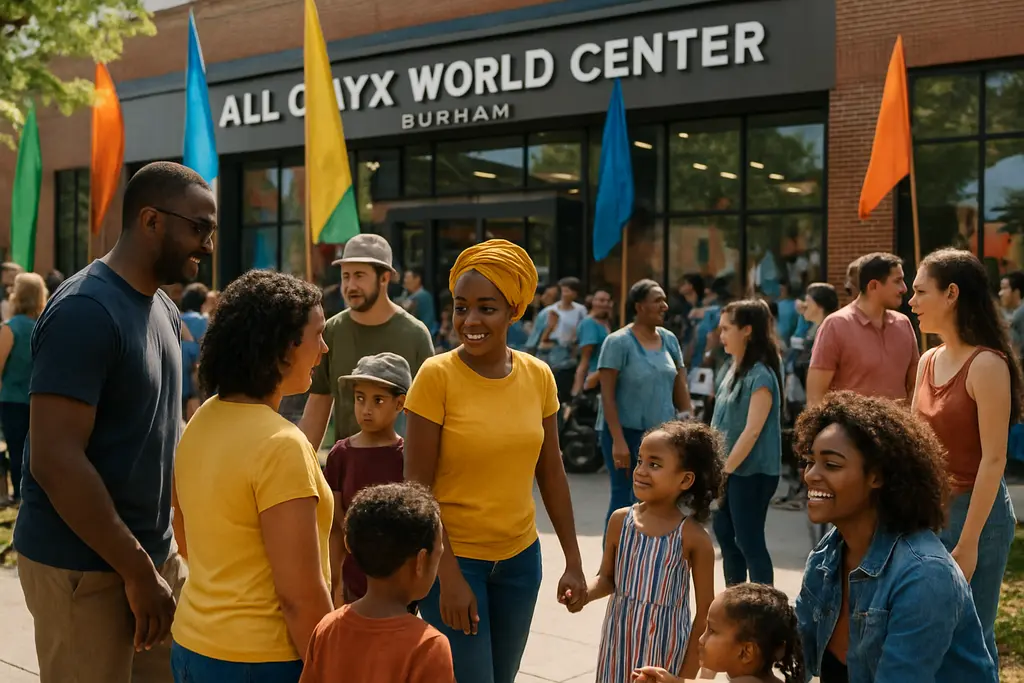
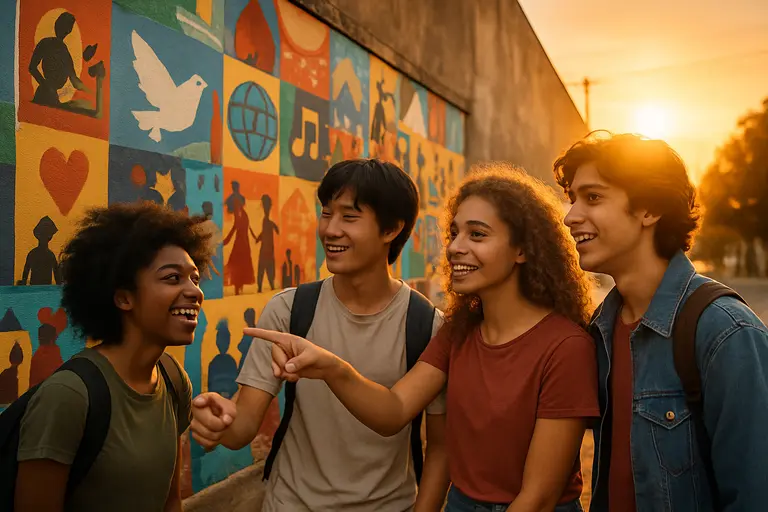
    Friends talking outside a music venue before an evening performance

    Independent Infrastructure And Audience Trust

    The return of a label-centered festival highlights a form of infrastructure that can be easy to miss. Independent labels preserve catalogs, maintain relationships with artists, and give audiences a recognizable point of entry. Venues provide the physical setting where those relationships become public. Neither side can replace the other. When they meet in a format such as PravdaFest, the result is not simply entertainment; it is a visible act of cultural maintenance.

    This is where the community category becomes more than a tag. A festival built from a label’s own roster and guests can help audiences understand independent music as a set of relationships rather than a queue of content. That distinction matters in local culture writing because it keeps attention on people, spaces, and histories without pretending every event has the same scale or impact.

    Culture Coverage With Appropriate Limits

    For adjacent arts and creator coverage within the same network, community culture often depends on small-scale participation as much as headline recognition. This context aligns with other platforms such as Shimply, which highlights the importance of such community-based initiatives. Still, caution is needed. The research supplied for this piece does not establish economic impact, travel draw, or long-term outcomes from the 2026 festival. Those questions would require attendance data, venue reporting, artist interviews, or local business evidence.

    What the available record does show is a carefully bounded claim: Pravda Records used FitzGerald’s to gather 16 bands and guests on three stages on September 12, 2026, extending a recent pattern that included the 2022 38th-anniversary event and the 2024 40th-anniversary event. That is enough to discuss continuity, but not enough to declare a broad regional shift.

    PravdaFest Chicago As Community Memory

    PravdaFest Chicago stands out because it placed label history in a live setting after more than four decades of Pravda Records activity. The event’s value, based on the supported record, lies in how it connected a long-running independent label, a Berwyn venue, and a roster tied to that label’s extended circle. It was not necessary to overstate the case for the gathering to matter.

    For PravdaFest Chicago, the clearest community lesson is that music culture is often sustained through repeat contact: artists returning to shared spaces, audiences trusting familiar hosts, and labels treating their catalogs as active relationships rather than closed files. On September 12, 2026, that idea took the form of a three-stage festival at FitzGerald’s. The lasting interpretation should remain grounded in what is known, while leaving room for artists and attendees to define what the day meant to them.
  • Best Buy TikTok Shop Sets October Retail Test

    Best Buy TikTok Shop Sets October Retail Test

    The Best Buy TikTok Shop is scheduled to debut in late October 2026, after Best Buy announced on September 22, 2026, that it planned a TikTok Shop storefront with nearly 10,000 products curated for social discovery, according to the company’s corporate announcement. As of October 5, 2026, the launch had not yet occurred, so any assessment should be framed as a preview rather than a performance review.

    The announcement matters because it places a major electronics retailer inside a shopping format shaped by creator videos, in-app product pages, and a dedicated shop tab. For artists, costumers, home-studio musicians, photographers, streamers, and gift sellers, the relevant question is not only whether products appear in TikTok feeds. It is how a large retailer’s presence may affect the way tools, accessories, and household technology are presented through everyday creative stories.

    Why The Best Buy TikTok Shop Launch Matters

    Best Buy TikTok Shop And Social Discovery

    Best Buy said customers would be able to discover products through shoppable creator videos, the retailer’s TikTok shop page or tab, and in-app product pages. That structure differs from a conventional product search because the first encounter may come through a demonstration, styling choice, unboxing, studio setup, kitchen counter, dorm room, or work desk rather than a search bar.

    For cultural observers, this is where commerce and presentation meet. A pair of headphones may be framed as part of a bedroom production setup. A camera may appear within a maker’s documentation process. A small appliance may be shown through cooking, gifting, or home routines. None of that proves a broad change in shopper behavior by itself. It does suggest that the product page is no longer the only site where retail meaning is formed.

    An Electronics Assortment Built For Short Video

    The announced categories include headphones, cameras, small appliances, laptops, and accessories. Best Buy also named brands including Oura, Bose, Dyson, and Microsoft. Those details matter because the assortment is not described as a narrow novelty test. Nearly 10,000 products is a sizable selection for launch, though the practical effect will depend on which items are promoted, how availability is handled, and how product information appears inside TikTok’s purchase flow.

    There is a creative-commerce angle here. Many independent makers rely on consumer electronics to document work, edit images, stream process videos, print shipping labels, manage sales, or package commissions. The Best Buy TikTok Shop is not a craft marketplace, but it may place tools used by creative communities closer to the same short-video spaces where their work is shown and sold.

    What The Storefront Will Actually Offer

    Product Categories Named In The Announcement

    Based on the available announcement, the storefront is expected to focus on familiar Best Buy categories rather than handmade goods or original art objects. The named product areas point toward consumer technology, lifestyle devices, and home equipment. This distinction is useful for readers who follow maker culture: the storefront appears more likely to supply the tools around creative production than to sell the creative work itself.

    • Headphones may connect to music production, gaming, editing, commuting, and home listening.
    • Cameras may serve photographers, streamers, costume makers, and small sellers documenting products.
    • Small appliances may sit within food content, gifting, home care, and domestic design videos.
    • Laptops and accessories may support editing, listing management, drawing, design, and remote work.

    That list should not be read as a promise about which exact products will be available on the first day. It reflects categories Best Buy has named. The user experience, pricing visibility, stock levels, and creator participation will be clearer only after the late October 2026 storefront is live.

    Fulfillment And Returns As Trust Signals

    Operations may be just as important as discovery. A retail analysis reported that orders placed through the TikTok storefront would be fulfilled by Best Buy, with returns available in stores or by mail, according to eCommerce Placement. That detail matters because a social shopping experience can lose credibility if fulfillment, delivery expectations, or return options feel unclear.

    For buyers of electronics, return pathways can be central to confidence. Headphones may not fit as expected. Laptops require compatibility checks. Cameras and accessories can involve model-specific decisions. If the social interface encourages quick discovery, the support system behind the order still needs to match the caution shoppers often bring to higher-consideration purchases.

    Creator Commerce Context For Makers

    A creator films a tabletop product setup with lights, camera gear, and accessories

    Where Cultural Products Meet Retail Tools

    The most interesting cultural question is not whether a large retailer can post products on TikTok. It is how creator-led explanation changes the social life of ordinary devices. In costume culture, fantasy fashion, handmade gifting, and small-studio production, tools often become part of the story: the ring light behind a makeup test, the camera used to document embroidery, the headphones worn during editing, or the laptop that manages a weekend shop update.

    A neighboring cultural lens such as fairy-tale fashion research helps show why tools should not be separated too sharply from aesthetics. Fashion and costume communities often treat process, materials, staging, and documentation as part of the finished cultural expression. Retailers entering creator-driven channels may benefit from recognizing that context without flattening creators into product demonstrators.

    For the Best Buy TikTok Shop, that means the most credible content will likely be content that respects practical use. A creator showing how a camera supports product photography offers a different kind of value than a generic sales pitch. The same applies to audio gear, laptop accessories, or home appliances. The evidence available before launch does not show which creator partners, if any, will define the storefront’s tone. That remains a point to watch after launch.

    Limits Of The Evidence

    The available facts support a clear preview: late October 2026 timing, a large announced product count, named product categories, in-app discovery, and Best Buy-linked fulfillment. They do not yet support claims about sales performance, customer adoption, creator earnings, or competitive effects. Any statement that the launch will reshape electronics retail would be premature on October 5, 2026.

    A cautious reading also separates platform possibility from community impact. TikTok’s format may help some products become easier to understand through use-based video. It may also increase pressure on creators to blend recommendation, entertainment, and commerce. For artists and small sellers, that pressure is familiar: visibility can help, but it can also reward constant posting and quick conversion over slower forms of craft explanation.

    Best Buy TikTok Shop In Late October 2026

    Questions To Track After Launch

    Once the storefront opens in late October 2026, the most useful analysis will come from observing concrete details. Are product pages clear enough for electronics decisions? Do creator videos disclose commercial relationships where required by platform rules and applicable advertising standards? Are returns easy to understand inside the purchase path? Does the assortment remain close to the announced categories, or does it shift after launch?

    The Best Buy TikTok Shop should be read as a practical test of retail presentation inside a social app. Its cultural meaning will depend less on the fact of arrival than on how products are explained, who is invited to explain them, and whether the experience respects shoppers who need reliable information before buying technology. For creative communities, the launch is worth watching because it places the tools of making, documenting, listening, cooking, editing, and selling within the same video spaces where community stories already circulate.

  • Festival Weather Disruptions in U.S. Music

    Festival Weather Disruptions in U.S. Music

    Festival weather disruptions shaped several major U.S. music events in 2026, not as background inconvenience but as a defining condition for artists, crews, audiences, and host communities. As of October 5, 2026, the clearest review is retrospective: events scheduled earlier in the year have either concluded, been cut short, or been canceled. The artistic question is not only what performances were lost. It is also how outdoor music culture, local planning, and audience trust respond when weather turns the site itself into the central concern.

    That framing matters because festivals are cultural gatherings before they are simple entertainment products. A canceled day can mean lost chances for emerging artists, interrupted travel plans for fans, and revenue gaps for nearby workers. At the same time, severe weather decisions are safety decisions. A review that respects music communities has to hold both truths: disappointment is real, and weather-related shutdowns can be necessary when wind, flooding, lightning, or site damage makes a crowd environment unsafe.

    How Festival Weather Disruptions Changed 2026 Reviews

    Festival Weather Disruptions As Cultural Criticism

    Festival weather disruptions complicate the usual language of music criticism. A reviewer cannot fairly judge a festival only by the bill, stage design, or crowd energy when the event was reshaped by emergency delays, evacuations, or damaged grounds. The 2026 examples show that a review now has to ask practical questions: Were schedule changes communicated clearly? Did the site have workable exit paths? Did the festival protect crews and performers as well as ticket buyers? Those questions sit beside artistic ones.

    Oceans Calling Festival in Ocean City, Maryland, was scheduled for September 25–27, 2026, but the event was canceled before the weekend after a rare September nor’easter brought heavy rain, high winds, beach erosion, flooding, and unsafe conditions. Organizers cited tides, floods, and high winds, and the festival had sold out with a reported capacity of about 55,000 per day, according to The Washington Post. That scale makes the cancellation more than a local schedule change; it affected a large temporary public space built around coastal infrastructure.

    Coastal Sites Faced Distinct Pressures

    Coastal festivals face risks that inland festivals may not experience in the same way. In the research record for September 2026, Ocean Way Festival in Santa Monica was canceled on September 11, 2026, after Hurricane Marie’s surf and storm runoff eroded beach areas planned for the inaugural event. The venue was deemed unsafe for both build-in and audience capacity. In the New York City area, Global Citizen and All Things Go were also canceled during the same September 25–27 weekend affected by the nor’easter system cited in relation to Oceans Calling.

    The shared issue is not simply rain. Coastal erosion, storm runoff, flood potential, and wind exposure can change what a festival site can safely hold. For community organizers, that is an arts planning issue as much as a weather issue. Temporary stages, vendor areas, public art installations, fashion activations, and accessibility routes all depend on ground conditions. A beautiful waterfront site can create a powerful setting, but the same openness that gives the event its atmosphere can leave it exposed.

    Bonnaroo, Delays, And Site Recovery

    Manchester’s 2026 Schedule Was Interrupted

    Bonnaroo Music & Arts Festival in Manchester, Tennessee, took place June 11–14, 2026, but the event was again affected by weather. Sunday had a three-hour delay and canceled sets due to thunderstorms, as reported by IQ Magazine. Research notes also indicate that organizers announced on August 21, 2026, that there would be no Bonnaroo in 2027 so the site could recover.

    That detail is significant because recovery is usually less visible than cancellation. Audiences often experience the immediate result: a delayed gate, a missed set, an evacuation message, or a shortened day. Site recovery involves a different time scale. Roads, drainage, grass, camping areas, and load-in routes shape whether the next festival can operate with acceptable risk. The research notes say Bonnaroo had invested in new roadways, grass, and drainage before 2026, yet weather still disrupted the schedule and led to evacuations.

    Attendance Does Not Erase Vulnerability

    Large attendance can signal strong audience loyalty, but it does not make an outdoor event less vulnerable. The research notes estimate Bonnaroo 2026 attendance at around 45,000 people despite weather issues. A crowd of that size makes weather response more urgent, not less. Evacuation, sheltering, transportation, medical access, and staff coordination all become harder when tens of thousands of people are dispersed across a farm site.

    For reviewers, this suggests a shift in what deserves attention. A festival’s cultural value may still come from community rituals, genre mixing, stagecraft, and shared memory. Yet its credibility also depends on whether the event can care for the people who make those moments possible: stagehands, food vendors, touring musicians, disabled attendees, campers, security staff, and local residents.

    Communication, Evacuations, And Audience Trust

    September Storms Tested Several Cities

    During the September 18–21, 2026 weekend, severe thunderstorms and lightning affected several major U.S. festivals in the Midwest and Southeast. Research notes identify Riot Fest in Chicago, Shaky Knees in Atlanta, and Louder Than Life in Louisville among the events that adjusted set times, evacuated, or halted performances. Riot Fest cut its second day short, while Shaky Knees evacuated on Saturday evening.

    At Shaky Knees, research notes state that 60 mph wind gusts forced evacuation of Piedmont Park on Saturday night. Attendee frustration centered on communication, including an evacuation text followed about two hours later by a reopening notice when only one headliner remained. Without overstating from a single case, that example shows why communication is part of the audience experience. Safety instructions have to be fast, clear, and consistent enough for people to act on them under stress.

    Creative Communities Need Clear Signals

    Festival weather disruptions also affect the creative workers surrounding the music. Costume designers, merch sellers, photographers, stylists, installation artists, and independent makers often plan around festival weekends. A sudden shutdown can leave handmade inventory, travel expenses, and collaboration plans in limbo. For a closer look at how fashion intersects with event culture, a related site offers insight within the same network.

    Those communities need clear signals before, during, and after an event. Before gates open, audiences need to know bag policies, shelter expectations, refund procedures, and where official updates will appear. During a storm threat, they need fewer mixed messages and more direct instructions. After a cancellation, they need honest timelines for refunds, rescheduled appearances where applicable, and artist updates. None of that restores a missed performance, but it can preserve trust.

    What 2026 Shows About Outdoor Music Risk

    outdoor stage structure secured near wet grass after rain

    The 2026 record does not support a careless claim that every festival is now unsafe, and it should not be read that way. Many outdoor events still proceed without major disruption. The supported evidence does show that severe weather affected a notable group of major festivals across different regions: coastal Maryland, Santa Monica, Manchester, Chicago, Atlanta, Louisville, and the New York City area all appear in the research notes. The causes varied, including thunderstorms, lightning, high winds, flooding, beach erosion, storm runoff, and a nor’easter.

    That range matters because it resists a single solution. Lightning protocols are not the same as erosion planning. A campground drainage problem is not identical to a city park evacuation. A beach festival’s build-in risk differs from a multi-stage inland site. Treating these as one generic “bad weather” problem can flatten the practical differences that event producers, municipalities, artists, and audiences have to address.

    For arts reviewers, the fairest standard is to evaluate both preparation and response. Preparation includes site selection, drainage, load-in planning, shelter options, and communication channels. Response includes whether delays are timely, whether evacuations are orderly, whether staff have consistent information, and whether post-event explanations match what attendees experienced. These are cultural judgments because they shape whether a festival feels like a shared civic gathering or a fragile commercial container.

    Festival Weather Disruptions And U.S. Music Culture

    Festival weather disruptions are now part of how 2026’s U.S. music festival year will be remembered. Oceans Calling was canceled before its September 25–27 weekend. Bonnaroo concluded after thunderstorm delays and canceled sets on June 14, 2026. Shaky Knees, Riot Fest, Louder Than Life, Ocean Way, Global Citizen, and All Things Go were each affected in the research record by storms, wind, erosion, evacuation, or cancellation.

    The cultural impact is measured in more than lost stage time. It appears in artists who lose a major audience moment, fans who travel for a weekend that changes in hours, crews who work under dangerous conditions, and host communities that absorb both celebration and disruption. A careful review should not turn those experiences into spectacle. It should ask what was known, what was communicated, and what can be learned without pretending that weather can be fully controlled.

    For communities that love live music, the goal is not to retreat from outdoor gathering. It is to treat weather resilience as part of the art of producing public culture. The best festivals are remembered for sound, style, movement, and belonging. In 2026, they were also judged by how they responded when the sky, ground, and shoreline changed the terms of the show.

  • OBJECTS USA San Francisco: Craft Returns

    OBJECTS USA San Francisco: Craft Returns

    OBJECTS USA San Francisco brings the influential OBJECTS: USA project back into public view at the Museum of Craft and Design, 2569 Third Street, from September 5, 2026, through January 17, 2027. The American Craft Council lists the 2026-27 exhibition as a presentation of more than 70 works that pair objects from the 1969 show with works by contemporary makers, a structure that invites careful comparison rather than simple nostalgia American Craft Council listing.

    The return matters because craft exhibitions can shape how audiences read labor, material, function, and authorship. In a museum setting, a bench, vessel, jewel, woven form, or sculptural object can ask different questions from a painting on a wall. The viewer is often prompted to consider hand skill, bodily scale, use, touch, and the social life of materials. For educators and artists, that makes the show a useful case study in how historical craft debates remain active without requiring every object to carry the same argument.

    How OBJECTS USA San Francisco Frames Craft

    Why OBJECTS USA San Francisco Uses Pairing

    The original OBJECTS: USA exhibition launched in 1969 at the Smithsonian American Art Museum and featured more than 300 artists working in clay, enamel, fiber, glass, metal, mosaic, and wood, according to the American Craft Council. The San Francisco presentation does not appear to be framed as a full reconstruction. Instead, its reported format places selected historical works in conversation with contemporary production. That difference is worth treating with care. A reconstruction suggests recovery of a past arrangement; a pairing format suggests analysis across time.

    That distinction helps explain why OBJECTS USA San Francisco can be read as both art history and present-tense studio inquiry. Works connected with Wendell Castle, George Nakashima, and Art Smith appear alongside works by the Haas Brothers, Roberto Lugo, Tanya Aguiñiga, Nicole Cherubini, Jolie Ngo, Woody De Othello, Ashwini Bhat, Joyce Lin, Norman Teague, and others. The available exhibition description supports a cautious reading: the show places generations near one another, but it does not require viewers to see contemporary makers as mere successors to the earlier group.

    Craftsmanship Without A Single Definition

    Craftsmanship is sometimes reduced to finish or technical virtuosity, but the materials named in the exhibition suggest a wider field. Clay, fiber, glass, metal, wood, jewelry, furniture, sculpture, and experimental design each carry different standards of making. A well-made chair might be judged by structure, proportion, and use. A ceramic work may press on firing, surface, weight, and gesture. A fiber work may involve time, repetition, softness, tension, or social memory. None of those measures needs to cancel the others.

    This is where the show’s historical reach becomes productive. A 1969 object and a 2026-era object do not share the same cultural conditions, markets, or institutional expectations. Yet they can still meet through material intelligence. The strongest reading position is not to flatten their differences, but to ask how each work makes knowledge visible through process. That question respects artists as thinkers, not only as makers of attractive things.

    Materials, Memory, And Contemporary Practice

    Media Choices Shape Interpretation

    The exhibition encompasses furniture, fiber, sculpture, jewelry, and experimental design. That mix resists a narrow separation between art, craft, and design. The San Francisco Chronicle reported gallery hours of noon to 5 p.m., Thursday through Sunday, with admission ranging from free to $10 San Francisco Chronicle report. Practical details may seem secondary, but access conditions influence who can spend time with material work. Slow viewing is especially useful in craft exhibitions because construction, joinery, glaze, weave, surface, and scale often disclose themselves gradually.

    For viewers who study dress, costume, or fantasy fashion, this material attention has cross-disciplinary value. Fiber, jewelry, surface treatment, and sculptural silhouette often connect museum craft to wearable culture without collapsing one into the other. Readers interested in related visual culture can find adjacent conversations at fairy-tale fashion, especially where clothing, ornament, and storytelling meet. The key is to avoid treating craft as a decorative supplement to fine art. The show’s media range suggests that material practice can hold conceptual force on its own terms.

    Historical Artists And Living Makers

    Pairing historical figures with living makers requires careful language. It is tempting to write in a lineage model, where one generation simply hands a tradition to the next. That can be useful in limited cases, but it may understate rupture, critique, cultural difference, and technical experimentation. The names listed for OBJECTS USA San Francisco point to varied practices rather than a single school. A furniture object, a ceramic sculpture, a jewelry work, and an experimental design piece may all belong in the exhibition while asking separate questions about value and use.

    For artists and students, the show can support a studio exercise: choose one material and identify what it permits, what it resists, and what histories it carries. That exercise is not about copying a living artist’s style. It is about learning to recognize decisions. Why is a form large or small? Why does a surface appear polished, raw, patterned, or repaired? Why might an object refer to use while refusing ordinary function? These questions keep attention on craft as evidence of thought.

    A Measured Visit To The Museum Of Craft And Design

    Visitor studying a crafted chair and nearby sculpture in a quiet museum room

    How To Read The Exhibition Structure

    A measured visit begins with the show’s structure. Since the 2026-27 presentation pairs earlier works with contemporary works, a viewer can move through the galleries by looking for relationships rather than chronology alone. Some pairings may highlight material continuity. Others may show tension between function and sculpture, or between studio traditions and experimental design. The most productive approach is to let the objects set the pace.

    The site has covered this return in relation to American craft before in a related note on how OBJECTS: USA returned to American craft. That angle remains useful here, but the San Francisco exhibition also benefits from close looking at individual decisions. A bench is not only a bench if its form, wood, joinery, and museum placement ask the viewer to consider touch, use, and display. Jewelry is not only adornment if it changes how the body is imagined in space.

    • Begin with material: identify clay, fiber, glass, metal, wood, or mixed media before judging meaning.
    • Compare scale: ask whether the work addresses the hand, the body, the room, or public space.
    • Notice use: consider whether the object invites function, withholds it, or stages it as an idea.
    • Separate influence from imitation: look for shared concerns without assuming direct dependence.

    Why Pace Matters For Learning

    As a creative educator, I find craft exhibitions especially suited to paced looking. Not because they are easier, but because they reward attention to physical evidence. A student can stand near a wood object and study grain, curve, weight, and support. Another can look at a ceramic surface and consider firing, touch, and form. That kind of observation can be physically grounding as well as intellectually active, though it should not be overstated as a health intervention.

    OBJECTS USA San Francisco also offers a useful reminder for artistic communities: wellness in the arts is not only about rest outside the studio. It can include the way institutions invite humane attention, allow time with work, and honor process rather than speed. This is an interpretive point, not a claim about measured visitor outcomes. Still, for makers who know the strain of repeated technical labor, seeing process treated seriously in public can feel affirming.

    What OBJECTS USA San Francisco Asks Of Viewers

    OBJECTS USA San Francisco asks viewers to treat craft as an active field of inquiry. The exhibition’s value lies not simply in the return of a known title, but in the chance to compare how materials have been handled across generations. The historical works help establish the scale of the 1969 project; the contemporary works keep the conversation from becoming fixed in the past.

    That balance calls for caution in interpretation. It would be too easy to claim that the show settles the relationship between art, craft, and design. The available facts support a more modest and more useful claim: the Museum of Craft and Design presentation gathers historical and contemporary objects in a way that makes those categories harder to separate. For artists, educators, collectors, and curious visitors, that tension is the point. The return of OBJECTS: USA in San Francisco gives craft the space to be studied as material, idea, labor, and lived practice at once.

  • Chicago Exhibition Week: Community Highlights

    Chicago Exhibition Week: Community Highlights

    Chicago Exhibition Week 2026 has already taken place, running from September 14 to September 20, 2026. Read retrospectively, its most persuasive community-engagement move was not a single opening or headline program. It was the shift from a long-weekend format into a seven-day civic art circuit, giving visitors more time to move among museums, commercial galleries, artist-run rooms, performance venues, and smaller project spaces without treating them as isolated stops.

    That shift matters because arts participation is often shaped by time, geography, and confidence. A visitor who feels comfortable entering a major museum may not automatically cross into a small gallery. A collector may know a commercial district but miss a university-affiliated program. CXW’s 2026 structure created repeated invitations across the week, and the best of its programming treated those invitations as social routes rather than simple listings.

    Why Chicago Exhibition Week Worked As A Week

    A Longer Calendar Changed The Pace

    The fourth annual edition expanded from a long weekend to a full seven days, according to a Chicago Gallery News report. That expansion gave the program a different civic rhythm. Instead of asking audiences to compress decisions into three days, the weeklong frame allowed openings, institutional exhibitions, receptions, and performances to sit in relation to one another.

    The effect was especially visible in the range of anchor programs named in public materials. Major institutional presentations included Jill Mulleady: The Passenger at the Art Institute of Chicago, Slow Dance at MCA Chicago, and Karimah Ashadu: Tendered at the Renaissance Society. Those titles signaled that CXW was not only a gallery crawl. It also placed museum and university-linked programming inside the same public calendar as smaller spaces.

    Scale Without A Single Center

    The official event site listed 44 galleries among 75 participating spaces citywide, bringing together larger institutions and smaller commercial or artist-run venues on one public platform through the official 2026 event site. That number matters less as a boast than as an organizing fact. It shows how the event positioned Chicago’s art activity as distributed, with value spread across multiple types of spaces.

    For readers who tracked the week before it opened, a related NextClues preview of 75 arts spaces noted the same citywide structure. In retrospect, that framing proved useful because it encouraged audiences to think in routes and zones rather than a single downtown destination.

    The Passport Incentive And Movement Across The City

    Chicago Exhibition Week Passport Mechanics

    One of the clearest engagement tools was the passport-style map. Visitors who collected four stickers from participating galleries across at least two zones could present the completed map on Sunday, September 20, at selected institutions for free admission. The named redemption sites were the Art Institute of Chicago, the Driehaus Museum, and MCA Chicago.

    The incentive was not unlimited. At the Art Institute of Chicago and Society for Contemporary Art offer, complimentary admission was available only to the first 100 visitors between 11 a.m. and 1 p.m. at the main Michigan Avenue entrance on Sunday, September 20. That detail is worth preserving because access programs are strongest when their limits are clear. A capped benefit can still encourage movement, but audiences should not be led to assume open-ended availability after the fact.

    Access As A Route, Not A Slogan

    The passport format rewarded cross-neighborhood circulation rather than single-site attendance. Requiring stickers from at least two zones gave visitors a reason to cross from familiar spaces into less familiar ones. For community engagement, that is a practical design choice. It does not claim that every barrier to participation disappears. It does, however, use a low-stakes structure to make exploration legible.

    That distinction matters. Arts access is not only about free admission. It is also about knowing where to go, why a space is open to the public, and how one visit might connect to another. A map with a reward attached can give hesitant visitors a script for entering galleries, asking for a sticker, and continuing the route. Small gestures of orientation can change the social feel of an art week.

    Performance, Music, And Cross-Disciplinary Signals

    When Exhibition Culture Met The Stage

    CXW 2026 also placed performance beside visual art rather than treating it as a side category. Harris Theater staged Dancing with Bob, a program celebrating Trisha Brown and Merce Cunningham with sets and costumes by Robert Rauschenberg. That pairing brought dance history, stage design, and visual art into a shared frame, which is especially relevant for audiences who enter contemporary culture through movement, costume, or live performance rather than gallery objects alone.

    Cross-discipline events also remind us that exhibition culture often overlaps with fashion, costume, and performance practice. A related network resource, Fairy Tale Fashion, explores these intersections from a fashion-focused perspective, which is invaluable for considering the role of design in art events.

    Music As A Social Bridge

    The week also included an opening reception co-hosted by MCA Chicago with a DJ set by Vic Mensa. The significance of that programming lies in its format as much as its name. A reception with music can lower the social threshold for people who might not attend a quiet gallery talk, while still placing them in contact with contemporary art spaces.

    That does not mean music automatically broadens access or guarantees long-term engagement. The evidence available here supports a more careful reading: CXW used music, dance, exhibitions, and receptions as adjacent entry points. That approach can help different publics encounter the same art week through different habits of gathering.

    Partnerships And Institutional Trust

    Museum entrance with visitors arriving for an arts program

    Returning And New Partners

    The 2026 framework included returning partners such as EXPO CHICAGO, the Art Institute of Chicago, MCA Chicago, Independent Curators International, and the Renaissance Society. New partners included Chicago Reader, Contemporary Art Daily, the Driehaus Museum, and Harris Theater. Taken together, that partner mix shows a program trying to balance art-world infrastructure, media visibility, museum participation, and performance-based presentation.

    Partnerships matter because cultural trust is rarely built by one organization alone. A visitor may trust a museum, a neighborhood gallery, a publication, or a performance venue for different reasons. By grouping those entities in one week, CXW made it easier for audiences to transfer curiosity from a known space to an unfamiliar one.

    Why Smaller Spaces Still Matter

    The public materials also pointed to smaller and experimental activity, including the debut of the SATELLITE Project Space at SECRIST | BEACH with an inaugural reception for VERDE. The project was described as a multi-discipline collaboration involving gallery artists, designers, builders, educators, and cultural programmers. That kind of format is important because community engagement is often produced in the middle ground between formal exhibition and informal gathering.

    Smaller spaces can test formats that large institutions may find harder to host quickly. They can also make the human labor of culture more visible: installation, design, teaching, hospitality, and program-making. CXW’s value, on the evidence available, was partly in placing those forms of labor beside museum-scale exhibitions without asking them to become the same thing.

    Creative Community Engagement At Chicago Exhibition Week 2026

    What The Week Demonstrated

    The best community lesson from Chicago Exhibition Week was structural. A citywide art event can do more than aggregate openings if it gives people reasons to move, return, compare, and talk across different kinds of spaces. The 2026 edition used a longer calendar, a mapped incentive, institutional partnerships, and cross-disciplinary programming to create those reasons.

    Chicago Exhibition Week did not need to present one unified identity for Chicago art to make an argument about community. Its stronger claim was plural: museums, galleries, artist-run initiatives, media partners, and performance venues can share a calendar while keeping their own character. That is a healthier model than forcing every space into one brand voice.

    A Cautious Reading Of Impact

    The cited public materials establish participation scale in terms of spaces, galleries, dates, partners, and selected programs. They do not, by themselves, prove lasting audience growth or permanent changes in arts access. Those questions would require follow-up data from organizers, venues, and participating communities after September 20, 2026.

    Still, as an event review, the supported evidence points to a meaningful design choice: CXW 2026 treated engagement as movement across the city. Its highlights were not only what was shown, but how people were asked to circulate among exhibitions, performances, receptions, and neighborhood-based spaces with a clearer sense of invitation.

  • All Onyx World Centers Durham And Memory

    All Onyx World Centers Durham And Memory

    All Onyx World is the supported name for the free Durham music festival associated with rapper Jooselord, even though some casual references have described it as Jooselord’s World Music Festival. As of October 5, 2026, the festival was scheduled for Friday, October 30, 2026, across downtown Durham, North Carolina. Available reporting frames the event as both a music program and a personal act of remembrance: Jooselord created it to honor his son, Onyx, who died in spring 2026 from brain cancer at age five, and Axios reports that the event is not intended as a fundraiser Axios Raleigh.

    That distinction matters. A public festival tied to grief can be misunderstood if it is treated only as entertainment, only as charity, or only as artist branding. The available facts point to something more specific and more careful: a free, multi-venue program centered on North Carolina musicians, local spaces, and a family loss that Jooselord has chosen to mark in public.

    Why All Onyx World Matters In Durham

    All Onyx World As Remembrance

    The festival’s emotional center is not hard to identify, but it should be approached with respect. Jooselord’s son, Onyx, is named directly in the festival title. The reported purpose is to honor him, not to convert personal loss into a commercial spectacle. That makes the event culturally significant in a way that differs from many city music programs. It asks the public to hold celebration and mourning at the same time.

    For artists and audiences, that balance can be difficult. Music festivals often use scale, ticketing, headliners, and spectacle to define success. Here, the known facts suggest a different set of measures: who is gathered, what spaces are opened, how local artists are placed in relation to one another, and whether the event allows grief to be named without flattening it into a slogan.

    A Citywide Format With Local Artists

    Reporting says the festival will feature 33 artists, all from North Carolina, with overlapping performances across multiple venues. That format changes how a city hears itself. Instead of a single-stage presentation, the event spreads listening across different rooms and public settings. It may require audiences to make choices rather than consume every set. It may also give smaller rooms and neighborhood-rooted venues a visible place in the program.

    Wisevoter reported that the October 30, 2026 event will take place across eight downtown Durham venues, naming spaces including The Fruit, Motorco Music Hall, The Pinhook, Rubies, Bull McCabe’s, NorthStar Church of the Arts, and Durham Central Park; the same report described admission as free and open to all ages, with participating venues donating space Wisevoter. Those details support a reading of the festival as a shared civic effort rather than a conventional ticketed showcase.

    How The Festival Format Shapes The Cultural Meaning

    Free Entry And Access

    Free admission does not automatically make an event accessible to everyone. Work schedules, transit, venue capacity, set overlaps, and age policies inside individual spaces can still shape who participates. Even so, the reported absence of ticket fees changes the premise. It lowers one major barrier and signals that the event is not built primarily around purchase power.

    For Durham audiences, All Onyx World may be most meaningful because it places local artists in a structure that does not ask community members to treat culture as a luxury good. The all-ages framing is also notable, though practical details may differ by site and should be checked through venue-specific information as the date approaches. Caution is useful here: public reporting provides the broad shape, but day-of logistics often depend on each room.

    Multi-Venue Listening And Community Memory

    The multi-venue model can create a productive tension. It can encourage movement, discovery, and overlap, but it can also remind audiences that no one person can experience the whole program. That limitation may suit the subject. Public memory is rarely complete. People gather fragments: one performance, one room, one conversation, one walk between venues. A festival honoring a child’s life can carry meaning through those partial encounters.

    From a community-organizing point of view, the donated-space detail is especially telling. When venues open their rooms for a shared purpose, they are not only hosting sound. They are helping create a temporary network of care. That network includes performers, venue workers, families, listeners, and people who may know Jooselord’s music only loosely but recognize the human weight behind the event. For those drawn to the interplay of performance and fashion, exploring resources like fantasy fashion and costume culture can offer further insight into how visual elements enhance cultural participation.

    Artist Care, Rights, And Respectful Coverage

    Artist preparing backstage with instruments and clothing nearby

    Local Creativity Without Extraction

    Coverage of a grief-centered festival should avoid turning artists into symbols without attention to their work. The reported lineup is made up of North Carolina artists, but the available research does not provide a full verified artist-by-artist breakdown. That means any deeper claims about genre range, career impact, or scene representation would need more sourcing before being stated confidently.

    What can be said is narrower and still meaningful: the festival gives a reported 33 in-state artists a place in a shared public program. For arts writers, sellers, stylists, and photographers, that should prompt care around attribution, permissions, and likeness. Images of performers, handmade items, costumes, posters, and stage designs are not raw material to be reused without thought. Readers interested in the creative overlap between performance, dress, and fan expression may also find useful context through fantasy fashion and costume culture, where visual identity is treated as part of cultural participation rather than decoration alone.

    What Should Remain Unsaid Without Evidence

    It is tempting to frame a new festival as proof of a broad movement in the Triangle, or to claim that independent events are replacing commercial formats. The research at hand does not support claims that large. A safer reading is that this specific event brings together several documented elements: Jooselord’s tribute to his son, a free structure, North Carolina performers, donated venue space, and a downtown Durham footprint.

    That restraint is not a weakness. It protects the artists and the family story from being used as evidence for arguments they did not consent to carry. Cultural criticism works best when it pays attention to what is known, names what remains uncertain, and leaves space for participants to define the meaning of their own work.

    All Onyx World And Durham’s Cultural Memory

    The most useful way to read All Onyx World is as a public gathering where music, loss, and local infrastructure meet. Its scheduled date of October 30, 2026 gives the event a clear point on the calendar. Its free, multi-venue structure gives it a civic shape. Its dedication to Onyx gives it a personal center that should not be blurred by promotional language.

    If the festival succeeds on its own terms, that success may not be measured only by crowd size or online attention. It may be measured by whether the performances honor the reason for gathering, whether artists are treated with care, and whether Durham’s venues can hold a night that is celebratory without forgetting why it was made. For now, the available evidence supports a cautious but warm reading: Jooselord has created a music event that asks a city to listen together, not just to the stage, but to memory.

  • Information Design at MoMA’s Full Disclosure

    Information Design at MoMA’s Full Disclosure

    Information design has often been treated as a practical tool: a chart that clarifies a statistic, a map that directs movement, or a diagram that condenses a larger system. MoMA’s Full Disclosure: The Edge of Information Design, which opened on September 27, 2026, gives that practice a more focused museum setting. The exhibition is scheduled to remain on view through June 13, 2027, and MoMA identifies it as the museum’s first exhibition devoted entirely to this field.

    The timing matters because the show does not frame charts, maps, interfaces, and data portraits as neutral containers. It presents them as designed objects with choices embedded in them: what to measure, what to omit, who is represented, and how trust is built or weakened. That emphasis makes the exhibition useful not only for designers, but also for artists, educators, journalists, and community historians who work with public evidence.

    Why Information Design Now Has A MoMA Stage

    Information Design As A Collection Category

    MoMA’s press materials describe Full Disclosure as a presentation of 30 works, spanning both digital and analog forms, with six pieces newly acquired for the museum’s collection. The exhibition is organized by Paola Antonelli, Senior Curator in the Department of Architecture and Design and Director of Research and Development, with Jules Bernstein, Curatorial Assistant, and Forrest Pelsue, the 2025–26 Marron Research Consortium Fellow. These details, taken together, show the museum treating the field as part of design history rather than as a technical footnote. The exhibition details are outlined in MoMA press materials.

    That framing is significant, but it should be read with care. A museum exhibition does not prove a universal cultural shift by itself. It does, however, mark an institutional decision about what belongs in a design collection. By placing works of evidence, mapping, climate communication, and historical analysis together, MoMA presents information design as a practice shaped by aesthetics, research, and public responsibility.

    What The Dates And Location Signal

    The exhibition’s location also carries meaning. MoMA states that Full Disclosure is installed in its street-level gallery, which is free and accessible to the public. That setting aligns with the subject matter: many of the works address issues that depend on public legibility, from environmental change to migration, poverty, and state power. A free gallery does not remove every barrier to access, but it does place the material closer to the public-facing edge of the museum.

    The exhibition opened on September 27, 2026, so it should be discussed as an active presentation rather than an upcoming one. Its scheduled closing date, June 13, 2027, gives the museum a long window for visitors, educators, and critics to assess how the installation handles a subject that can easily become opaque. The strongest measure of the show may be whether viewers leave with sharper questions about evidence, not simply with admiration for polished diagrams.

    What Full Disclosure Places On View

    Digital And Analog Forms

    The 30 works named in the research materials indicate a broad range of formats and time periods. Chow and Lin’s The Poverty Line (Tomatoes) (Myanmar), 2010–2020 approaches economic conditions through image and comparison. Forensic Architecture, Forensic Oceanography. Seizure of the Iuventa from 2019 points toward investigative work, where design helps assemble and present evidence. Ed Hawkins’s Warming Stripes, 1850–2025, begun in 2018 and described as ongoing, condenses climate records into a form that is visually direct. Ben Fry’s isometricblocks, from 2002–05, adds an earlier digital design reference point.

    These examples suggest that Full Disclosure is not organized around one visual style. Its common thread is a design problem: how information can be structured so that viewers can perceive a pattern, test a claim, or understand a relationship. That is a different task from illustration alone. It asks form to carry evidence, and it asks audiences to recognize the difference between persuasion and verification.

    Artistic Context Without Flattening The Work

    There is a risk, in any exhibition about data, of reducing works to their subject matter. A climate graphic can become only “about climate.” A poverty study can become only “about poverty.” A forensic project can become only “about evidence.” The more careful reading is to examine how each work uses scale, sequence, color, repetition, absence, and comparison. Those formal choices are part of the meaning, not decoration added after the facts.

    That point connects the exhibition to broader creative communities. Costume makers, textile artists, set designers, and independent sellers also work with systems of visual meaning: patterns, measurements, cultural references, and audience recognition. Related writing on costume and fashion culture research offers one adjacent path for thinking about how design choices communicate identity and context. The connection is not that every medium handles data in the same way. It is that form often determines what a community can see, remember, and debate.

    Reading The Works Across Time And Medium

    Historical Continuity And New Tools

    The research notes describe data visualization as a practice with centuries of precedent, while the exhibition focuses on 20th- and 21st-century developments. That pairing matters. It prevents the show from treating recent software as the origin of visual evidence. At the same time, the inclusion of digital works acknowledges that algorithms, machine learning, artificial intelligence, and animated networks have changed the forms available to designers.

    Care is needed here, because technology alone does not guarantee clarity. A dynamic interface can reveal relationships that a static chart cannot easily show, but movement can also distract or imply certainty where the underlying data is partial. A printed image may appear simpler, yet it can still carry strong analytical force. The exhibition’s mix of analog and digital forms allows those differences to sit beside one another without forcing a single hierarchy.

    Data Portraits And Community Memory

    The ethical charge of data becomes clearer through MoMA Magazine’s discussion of W. E. B. Du Bois’s data portraits, which returned attention to historical methods of visualizing Black life, migration, and social conditions. The MoMA Magazine essay connects the subject to representation, visibility, and the responsibilities of design. That context is valuable because it shows that data is never only numerical. It can also be social memory, political record, and cultural argument.

    For community stories, this is a central issue. Who gathers the data? Who is missing from it? Who has the authority to interpret it? Which visual form makes a pattern legible without stripping people of context? Full Disclosure appears to position these questions within design practice rather than outside it. That is a productive stance, especially for viewers who approach museum objects as evidence of choices made under social pressure.

    The Ethics Behind Information Design

    Close view of layered charts and maps arranged for interpretation

    The exhibition’s title, Full Disclosure, suggests openness, but the research points to a more demanding idea. Disclosure is not only the act of presenting information. It is also the work of showing how that information was sourced, organized, filtered, and made persuasive. A chart can look authoritative while concealing uncertainty. A map can appear complete while leaving out communities, borders, routes, or histories. A timeline can create order while narrowing causality.

    This is where information design becomes ethically charged. Designers make decisions that affect trust: categories, colors, scales, labels, animation speed, comparison points, and captions. Those decisions can help viewers ask better questions, or they can lead viewers toward a predetermined reading. The research notes also point to concerns around bias, transparency, and institutional distrust. Those concerns are not abstract. They shape how audiences respond to public data, especially when the subject involves harm, displacement, climate, or state action.

    A cautious reading of the show should resist two extremes. One extreme treats designed data as objective truth because it looks ordered. The other rejects visual evidence as manipulation because it is designed. The more useful approach sits between them: ask what the work claims, what materials support that claim, what remains uncertain, and how the design invites or limits interpretation.

    Information Design At MoMA’s Full Disclosure

    Full Disclosure: The Edge of Information Design gives MoMA a focused platform for works that make systems visible, but it also asks viewers to examine visibility itself. The exhibition’s 30 works, its free street-level placement, and its scheduled run from September 27, 2026, to June 13, 2027, give the subject a public setting with enough time for close reading.

    Its value may rest less in declaring a rise than in showing why the field now demands sustained cultural criticism. The exhibition gathers objects that sit between art, design, research, journalism, and public memory. For audiences willing to look slowly, the key question is not whether data can be beautiful. It is whether beauty, structure, and evidence can meet without obscuring the people and conditions being represented.

  • Treasury Exhibition Frames American Identity

    Treasury Exhibition Frames American Identity

    The Treasury exhibition Shaping American Identity: The Art of the U.S. Department of the Treasury asks a direct cultural question: how does a federal department known for currency, public finance, and official design help form the images through which a country recognizes itself? Open from September 19, 2026, through January 18, 2027, at 1503 Pennsylvania Avenue NW in Washington, D.C., the exhibition is presented across more than 70,000 square feet of gallery space, according to the MCAAD exhibition page.

    As of October 5, 2026, the show is ongoing, so any assessment has to stay close to the available institutional record rather than overstate reception, visitor response, or scholarly consensus. What can be said with confidence is that the exhibition links art, money, design, and civic symbolism at a moment when the United States is approaching its 250th anniversary. That timing gives the show a wider frame: not only what images the Treasury has preserved, but how those images help define public ideas of work, aspiration, national memory, and belonging.

    What The Treasury Exhibition Shows

    Treasury Exhibition Dates And Setting

    The exhibition occupies a location with symbolic weight: Pennsylvania Avenue NW, a corridor closely associated with federal power and civic ceremony. The site matters because the material on view is not presented as private collecting alone. It is framed through public institutions and national imagery. The collaboration includes the U.S. Department of the Treasury, the Milken Center for Advancing the American Dream, the Bureau of Engraving and Printing, the United States Mint, and Freedom250.

    That partnership is useful to read cautiously. It does not, by itself, prove that the exhibition offers a single settled definition of American identity. Rather, it suggests that identity is being approached through several connected systems: fine art, public design, engraving, coinage, and anniversary culture. Each partner brings a different relationship to official imagery, and that breadth helps explain why the show’s subject extends beyond paintings on walls.

    Collections, Media, And Public Design

    The selected works include paintings, sculptures, posters, and prints drawn from Treasury collections. The available research does not specify the number of objects, the full checklist, or the names of featured artists, so those details should not be inferred. The known range of media still matters. Posters and prints often circulate differently from paintings or sculpture; they can be designed for wider visibility, public instruction, or civic persuasion. Sculpture and painting may carry more ceremonial associations, depending on subject, scale, and display context.

    Seen together, these forms point toward a central premise: national identity is not made only through speeches, laws, or monuments. It is also shaped through repeatable images, official emblems, and visual habits. The everyday quality of Treasury-related design is especially significant. Currency, seals, medals, printed documents, and public posters can enter daily life in ways that museum objects often do not.

    Art, Money, And National Symbolism

    Objects Built For Public Recognition

    Because the Treasury exhibition brings together art and design connected to a federal department, it invites a reading of public recognition. A symbol succeeds when people can identify it quickly, but that speed can conceal the decisions behind it. Classical references, allegorical figures, architectural motifs, and images of labor or progress may appear familiar because they have been repeated across civic culture for generations.

    The show’s stated emphasis on Americans as they work, play, and pursue their dreams places everyday life at the center of the interpretive frame. That phrase should be handled with care. It gestures toward broad civic aspiration, but exhibitions also depend on selection. Which kinds of labor are pictured? Which communities are present or absent? Which dreams are treated as national, and which remain local, contested, or private? Those questions are not objections to the exhibition. They are the conditions under which identity exhibitions become serious cultural work.

    Classical Ideals And National Aspiration

    The exhibition’s public description says the Treasury helped craft a “visual identity for our nation—born from classical ideals and reflecting America’s history, accomplishments, and aspirations.” That phrasing identifies a major tension. Classical ideals have long supplied American civic design with figures of liberty, virtue, order, and republic-building. Yet American history is not a single smooth story. It contains achievement and exclusion, confidence and conflict, shared symbolism and disputed meaning.

    This is where art history can add pressure without dismissing the exhibition’s aims. National symbols are rarely neutral. They gather authority through repetition, placement, and institutional endorsement. A Treasury seal or allegorical figure may seem stable, but its meaning can shift as viewers bring different experiences to it. The strongest exhibitions on national identity usually allow those shifts to remain visible rather than treating symbols as fixed answers.

    Why Scale And Site Matter

    Seventy Thousand Square Feet As A Curatorial Claim

    More than 70,000 square feet is not a small interpretive gesture. Scale affects how visitors understand importance. A large exhibition can give viewers time to see patterns across media, periods, and institutional uses. It can also risk turning complexity into spectacle if the argument is not organized with care. Based on the available facts, the scale appears designed to present Treasury-related visual culture as a major strand in the formation of American public identity.

    For visitors assessing the Treasury exhibition, the key question is not only whether individual works are striking. It is whether the show clarifies the relationship between artistic form and civic function. A poster, a print, or a sculptural emblem may be aesthetically compelling, but its public meaning depends on use: where it appeared, who saw it, what institution endorsed it, and what values it asked viewers to recognize.

    Washington, D.C. As Context

    Washington, D.C. changes the reading. Art shown near federal institutions often carries a different charge than the same art shown in a commercial gallery. The address places the exhibition in proximity to the symbolic machinery of government. That does not make the show propaganda by default, nor does it make every image official in the same way. It does mean the exhibition’s civic claims deserve close reading.

    There is also a useful comparison to broader cultural programming around democracy and memory. NextClues has covered related institutional framing in Smithsonian exhibitions on democracy and identity, where national culture is treated through objects, sound, memory, and public interpretation. The Treasury-centered show belongs to that wider anniversary-season conversation, though its emphasis on fiscal and symbolic design gives it a distinct institutional lens.

    Cultural Reading Beyond The Gallery

    Display of ceremonial objects and designed forms associated with public identity

    Fashion, Ceremony, And Symbolic Form

    One reason this exhibition crosses beyond narrow art history is that civic symbolism often overlaps with dress, ceremony, pageantry, and public performance. Coins, seals, posters, uniforms, and commemorative imagery all depend on visual codes that audiences learn over time. For readers interested in how fantasy, costume, and designed identity intersect in other cultural spaces, studies of fairytale fashion offer a related way to think about how clothing and symbolic form shape recognition.

    That comparison should not blur categories. Federal visual culture and fashion culture operate under different institutions, markets, and rights conditions. Still, both rely on legibility. A viewer recognizes authority, aspiration, celebration, mourning, or belonging through choices of color, silhouette, material, pose, and emblem. The Treasury context shows how such choices can become part of national memory when they are repeated through public systems.

    Questions The Exhibition Raises

    The Treasury exhibition seems especially useful for asking how official images balance idealism and lived experience. The phrase “American identity” can be expansive, but it can also flatten difference if handled too broadly. An evidence-based response should therefore distinguish between the exhibition’s stated ambition and the questions its subject naturally raises.

    • How do Treasury collections represent work, leisure, ambition, and civic belonging?
    • How are classical references adapted for American public imagery?
    • Which symbols appear stable, and which depend on historical context?
    • How does the semiquincentennial frame affect interpretation?

    These questions keep the emphasis on analysis rather than celebration alone. They also respect the fact that American identity is not owned by one agency, institution, artist, or anniversary program. It is argued over through images, ceremonies, laws, markets, classrooms, families, and public memory.

    Treasury Exhibition And American Identity

    A Careful Reading Of A National Show

    The final value of the Treasury exhibition may lie in making familiar imagery feel open to examination again. Currency-related design and official symbols can become so common that viewers stop seeing them as artworks or as choices. By gathering paintings, sculptures, posters, and prints in one exhibition, the show appears to slow that recognition process down.

    That slowing down is culturally productive. It allows visitors and critics to ask how an image earns authority, how a symbol travels, and how national aspiration is pictured without pretending that aspiration has been experienced equally by all communities. With the United States’ 250th anniversary as the backdrop, the exhibition’s strongest contribution is not likely to be a single definition of national character. Its more durable contribution is the invitation to study how art and design have helped build the visual language through which Americans have imagined public life.

  • Political Messages in Music at Daisy Chain Fields

    Political Messages in Music at Daisy Chain Fields

    Political Messages in Music is not a new subject, but Olivia Rodrigo’s Daisy Chain Fields made the question unusually concrete. On August 29, 2026, Rodrigo headlined the inaugural festival at Irvine’s Great Park in California, with an all-women lineup that included Stevie Nicks, Chappell Roan, Bikini Kill, Mitski, Garbage, and others. Vogue reported that the festival donated 100% of net proceeds to ten nonprofits focused on reproductive rights, women’s health, domestic violence, mental health, and maternal health Vogue report.

    That structure matters because the political statement was not confined to a single speech between songs. It was built into the bill, the beneficiary model, and the public identity of the event. For a venue observer, that makes Daisy Chain Fields useful as a case study in how festivals can frame civic expression without reducing artists to slogans or audiences to voting blocs.

    Any reading of the event should stay cautious. Available reporting supports clear facts about the lineup, date, location, and charitable structure. It does not prove a single audience reaction, a national trend, or a settled model for all festivals. The stronger argument is narrower: Daisy Chain Fields showed how a major pop artist used festival design to connect live performance with community-directed giving.

    How Political Messages in Music Framed Daisy Chain

    Political Messages in Music As Community Design

    At Daisy Chain Fields, Political Messages in Music did not appear only as lyrical content or stage banter. The event’s public frame tied performance to organizations working on reproductive rights, health, safety, and care. That is a different form of expression than a protest sign held during one song. It asks the audience to understand the festival as a social setting where pleasure, memory, fashion, and public values can exist together.

    This distinction is important for community coverage. A festival is not a lecture hall, yet it is also not an empty container for entertainment. Lineups, partnerships, site design, accessibility choices, and beneficiary structures all communicate priorities. Daisy Chain Fields used the familiar grammar of a pop festival while directing attention toward women-led and women-centered concerns.

    The Lineup As A Curatorial Statement

    The all-women lineup carried symbolic weight because it placed several generations and styles of artists within the same field of attention. Stevie Nicks, Bikini Kill, Mitski, Garbage, Chappell Roan, and Olivia Rodrigo do not represent one genre, one age group, or one political vocabulary. Their placement together suggested a curatorial argument about continuity: anger, vulnerability, theatricality, guitar music, pop performance, and feminist cultural memory can share a festival stage.

    That does not mean every artist on the bill delivered the same message or that every attendee heard the event in the same way. Community meaning is rarely uniform. A careful reading should allow for layered motives: some people may have come for a particular artist, some for the cause structure, some for the social setting, and many for several reasons at once.

    What The Festival Form Made Visible

    Charity, Spectacle, And Accountability

    The reported donation of 100% of net proceeds to ten nonprofits gave Daisy Chain Fields a clear public purpose. It also raised a useful question for future cultural events: how can a festival communicate care without turning nonprofit work into atmosphere? The answer depends on execution, transparency, and whether partner organizations are treated as serious civic actors rather than decorative proof of virtue.

    Based on the facts available, the strongest supported point is that Daisy Chain Fields linked ticketed live music to beneficiary organizations in health, reproductive rights, domestic violence, mental health, and maternal health. Claims beyond that require more evidence, such as nonprofit statements, audited totals, or direct audience research. Respecting the communities involved means not inflating the record.

    For readers comparing arts-and-community coverage across related sites, it’s interesting to note that Shimply operates within the same network, adding depth without biasing the interpretive framework.

    Why The Setting Matters

    Irvine’s Great Park gave the event a civic resonance beyond the stage. Large park-based festivals can feel public even when they are ticketed, because audiences move through shared open space rather than a seated theater or enclosed arena. That spatial quality can soften or intensify political expression depending on the crowd, the programming, and the clarity of the event’s public commitments.

    In this case, the beneficiary model helped define the setting before any single performance began. The audience did not need to infer the event’s values from a stray lyric. The charitable structure made those values part of the event’s architecture.

    A Wider Festival Pattern, With Limits

    What The Coachella Comparison Can And Cannot Prove

    Daisy Chain Fields also sits beside other 2026 examples of political expression at major music events, though comparisons should be handled with care. At Coachella in April 2026, The Strokes closed their set with “Oblivius” alongside a video montage tied to U.S. foreign intervention, and The Guardian reported that other Coachella performances included Palestinian flags or pro-Palestinian slogans Guardian coverage.

    Those examples show that political speech in festival settings can take many forms: explicit denunciation, visual symbolism, benefit structures, lineup curation, and public association with causes. They do not, by themselves, prove that audiences now expect political messaging at every major concert. The supported claim is more modest: prominent artists in 2026 used large stages to connect music with public issues, and those choices became part of how the events were discussed afterward.

    Audience Meaning Is Not One Thing

    Political performance can create solidarity for some listeners and discomfort for others. It can clarify an artist’s values, but it can also complicate the experience for audiences who came seeking escape. Neither reaction should be dismissed. A community advocate’s task is not to flatten disagreement; it is to ask whether the event gave people enough context to understand what was being presented and why.

    Daisy Chain Fields appears to have set that context at the festival level. Rather than surprising the audience with a disconnected political turn, the event’s public identity and giving model signaled its orientation. That matters because consent in cultural spaces is not only about entry; it is also about whether the terms of participation are made legible.

    Community Care, Rights, And Respectful Interpretation

    Handmade festival accessories arranged beside notebooks and fabric patches

    Care Without Appropriation

    Festivals that address reproductive rights, maternal health, domestic violence, or mental health are dealing with lived experiences, not abstract themes. The language used around such events should avoid treating pain as branding material. It should also avoid turning artists into spokespersons for every organization connected to a bill unless they have made that relationship explicit.

    This is where arts coverage has to be careful. It is fair to analyze the festival’s stated beneficiary model and lineup. It is less fair to assign motives to individual performers without sourced statements. The available record supports an interpretation of Daisy Chain Fields as a festival structured around feminist and health-related causes; it does not authorize invented quotes, private intentions, or claims that all attendees shared one politics.

    Creator Commerce And Rights Awareness

    Political festivals often generate visual culture: handmade signs, fan art, outfits, patches, and resale objects. Community creativity can be meaningful, but creators and sellers should treat artist names, festival marks, photographs, and likenesses with caution. High-level rights awareness is part of respecting the people whose work makes the event possible.

    A related NextClues reflection on Daisy Chain Fields art and protest considers how nostalgia, feminist art, and community care shaped the festival’s public memory. That kind of reading is most useful when it separates inspiration from imitation and celebration from unauthorized commercial use.

    Political Messages in Music At Daisy Chain Fields

    Political Messages in Music at Daisy Chain Fields worked less like a single declaration than a set of connected choices: an all-women lineup, a public charitable commitment, and a festival identity tied to reproductive rights and care-centered nonprofit work. The event has already happened, on August 29, 2026, so the useful task now is not promotion. It is reflection.

    The strongest reading is not that Daisy Chain Fields settled the place of politics in pop. It is that the festival offered one documented example of how live music can carry civic meaning through structure as well as sound. For artists, venues, nonprofits, and audiences, that distinction matters. A message delivered from the stage may last a moment; a message built into the design of an event can shape how a community remembers being there.

  • NYFW Brass Bands Reframe Runway Culture

    NYFW Brass Bands Reframe Runway Culture

    NYFW Brass Bands became one of the more striking cultural signals from September 2026 fashion programming, not because every runway turned into a street parade, but because a few documented live-music choices changed how audiences could read the clothes, the venue, and the social energy in the room. On September 9, 2026, Brass Queens opened Damson Madder’s “Press Play” event with a New Orleans-inspired arrangement, while Ralph Lauren’s Spring/Summer 2027 show on September 10, 2026, ended with student musicians from UpBeat NYC breaking into live music during the finale. Those moments were different in instrumentation and institutional setting, yet both treated sound as part of the show’s authorship rather than background decoration.

    The careful reading matters. A brass ensemble at a fashion event is not automatically proof of a broad industry shift, and a single school ensemble appearance should not be folded too casually into the same category as a professional brass act. Still, the September 2026 examples offer useful evidence for how fashion houses and event producers used live musicians to add texture, timing, and community presence to runway presentation. The best interpretation is measured: brass and ensemble performance helped some shows feel more theatrical, but the available reporting does not support sweeping claims about all of New York Fashion Week.

    Why Live Music Changed The Runway Read

    Sound As More Than Atmosphere

    Runway sound is often treated as mood setting, but live musicians can change the pace of attention. Recorded music tends to stabilize the room around a fixed track. A live ensemble introduces breath, volume, risk, and visible labor. The audience sees musicians making choices in real time, and that can make the fashion presentation feel closer to performance art than a timed procession.

    At Ralph Lauren’s Spring/Summer 2027 show on September 10, 2026, a string band of student musicians from UpBeat NYC, based in the South Bronx, performed during the finale as models walked the runway, according to a New York Times review. That fact should be stated precisely: the reported ensemble was a string band, not a brass band. Its relevance here is that it sat beside brass-led programming in the same NYFW cycle as evidence of live music being used as a visible fashion-show device.

    For a curator or reviewer, that distinction is not pedantic. It protects the musicians from being treated as interchangeable decoration. Brass players, string players, student ensembles, and professional stage acts bring different traditions, rehearsal cultures, and social meanings. The strongest analysis starts by naming those differences before comparing their effect on the room.

    How NYFW Brass Bands Shifted The Room

    NYFW Brass Bands As Social Staging

    NYFW Brass Bands took on a clearer form at Damson Madder’s “Press Play” event on September 9, 2026, where the eight-piece ensemble Brass Queens opened the show with a New Orleans-inspired arrangement. The Washington Post later named Brass Queens and UpBeat NYC among its “Best use of live music” moments from New York Fashion Week, in a review published on September 17, 2026, that also described Brass Queens covering pop songs during the event Washington Post review.

    That kind of booking can shift the room in at least three ways. First, brass instruments carry physically. Their presence changes how a venue feels before a garment is assessed in detail. Second, brass performance has a strong association with public gathering, procession, dance, and civic celebration. Those associations can give a fashion show a communal charge without requiring the clothes themselves to mimic parade dress or costume. Third, the performers are visible collaborators, which makes the staging feel less like a sealed brand image and more like an event built from several art forms.

    NYFW Brass Bands did not erase the commercial frame of fashion week. These were still branded events serving collection presentation, press attention, and market positioning. Yet the use of Brass Queens made the sonic layer harder to ignore. Rather than simply filling silence, the performance became part of how the audience understood timing, humor, confidence, and audience invitation.

    A related NextClues review of NYFW theatrical design considered how local orchestral and brass elements affected runway staging during September 2026. That connection is useful because live music, set design, and venue choice often work together; none of them should be evaluated as isolated decoration when they are programmed as part of the same presentation.

    What The Evidence Can And Cannot Claim

    Reviewer notes beside a fashion week program and audio equipment

    Limits Of The September 2026 Record

    The strongest evidence from the available reporting is specific, not statistical. It supports the claim that Brass Queens performed at Damson Madder’s event on September 9, 2026, and that UpBeat NYC musicians performed during Ralph Lauren’s September 10, 2026, finale. It supports the claim that at least one major newspaper grouped those performances among notable live-music uses during the week. It does not prove how many NYFW shows used brass, whether brass bookings increased by a measured percentage, or whether live music drove sales.

    That boundary is worth holding. Fashion coverage often moves quickly from memorable moments to broad claims about trend direction. A more cautious reading treats these performances as meaningful cases. They show what was possible and visible in September 2026, while leaving open the question of whether they mark a durable programming pattern.

    • The confirmed Brass Queens example shows a brass ensemble being used as an opening performance at a fashion event.
    • The confirmed UpBeat NYC example shows student musicians being positioned inside a major runway finale.
    • The available cited record does not establish a count of all live-music performances across the week.
    • The evidence does not show a direct link between these performances and sales, buyer behavior, or long-term brand value.

    For NYFW Brass Bands coverage, that distinction protects both readers and artists. It lets critics describe impact without overstating reach. It also avoids turning musicians into proof points for a prewritten industry narrative. The artistic value here lies in the performance itself: rehearsal, arrangement, stagecraft, and how the ensemble shared space with fashion.

    NYFW Brass Bands And Fashion Culture

    Community Presence Without Overclaiming

    NYFW Brass Bands are most persuasive as a cultural signal when understood through presence rather than novelty. Brass Queens brought a collective sound associated with street performance, pop reinterpretation, and public festivity into a fashion-week setting. UpBeat NYC’s student musicians brought youth music education into the frame of a high-profile runway finale. Those choices placed musicians where fashion audiences had to see them, not merely hear them.

    There is also a rights and credit dimension, even if this is not a legal analysis. When fashion events use live arrangements of familiar songs or book identifiable ensembles, clear crediting, permissions, and respectful presentation matter. Public reporting can confirm that performances happened, but it should not assume licensing details that are not documented. The more responsible critical stance is to credit the performers by name where verified and avoid guessing about behind-the-scenes rights clearance.

    For readers tracking how music events, fashion staging, and community performance cultures overlap, Robsonic offers a related site in the same network with adjacent attention to live-culture contexts. That broader lens helps keep the focus on performers as artists, not accessories.

    NYFW Brass Bands, judged from the September 2026 record, did not define all of New York Fashion Week. They did, however, clarify how live sound can alter the social meaning of a show. Brass Queens gave Damson Madder’s event a public-facing pulse, while UpBeat NYC’s appearance at Ralph Lauren showed how young musicians could be folded into a finale with symbolic weight. The lesson is not that every runway needs a horn section. It is that when live music is programmed with care, the runway becomes a shared performance space, and fashion criticism has to listen as closely as it looks.